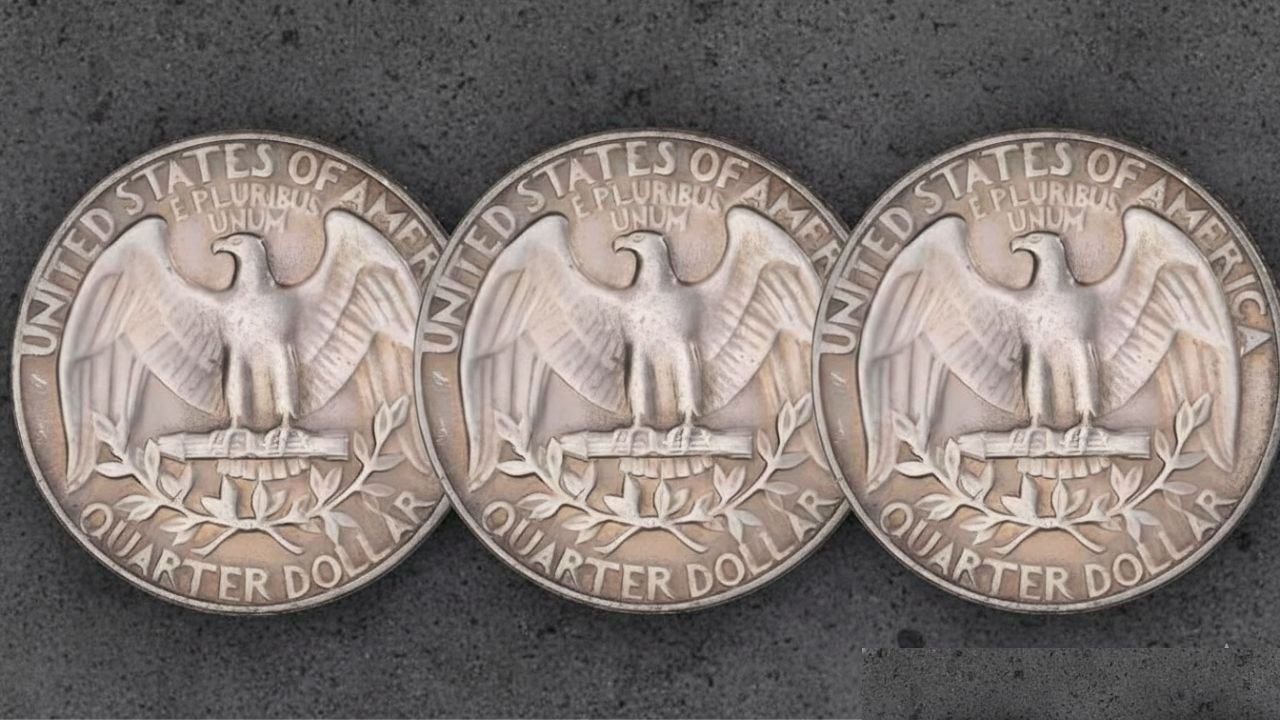
3 Valuable Silver Washington: Washington quarters, first minted in 1932 to commemorate the bicentennial of George Washington’s birth, are more than just currency—they are miniature pieces of American history. For collectors, the pursuit of these coins, particularly the silver issues minted from 1932 through 1964, combines historical interest with the thrill of the hunt. While most circulated examples are valued for their 90% silver content, certain dates and mint errors are highly sought-after for their rarity. This guide explores key varieties, their historical context, and what makes them enduring treasures in the world of numismatics.
The Coveted 1932-D Washington Quarter
Struck during the first year of the series at the Denver Mint, the 1932-D quarter holds a special place in numismatic history. Its production coincided with the depths of the Great Depression, a time when coinage demand was exceptionally low. Consequently, the Denver Mint produced only 436,800 of these quarters, making it the lowest mintage of any regular-issue Washington quarter in the silver era. While a heavily worn example might trade for a few hundred dollars, its value escalates dramatically with grade. Uncirculated specimens, which have survived the decades without wear, showcase the full, sharp detail of John Flanagan’s original design and can command prices in the low to mid five-figure range at auction. This coin is a cornerstone for any serious collection of 20th-century American coinage.
Informational Table Key Silver Washington Quarters at a Glance
| Coin Date & Mint | Mintage | Key Feature | Estimated Value Range (Circulated) | Estimated Value Range (Uncirculated/MS63+) |
|---|---|---|---|---|
| 1932-D | 436,800 | Lowest mintage Denver issue, inaugural year. | $400 – $1,500+ | $3,000 – $20,000+ |
| 1932-S | 408,000 | Lowest overall mintage, key series date. | $450 – $2,000+ | $4,000 – $25,000+ |
| 1942-D Doubled Die Obverse | N/A (Variety) | Noticeable doubling on obverse lettering and date. | $200 – $1,000+ | $1,500 – $10,000+ |
| Common Silver Quarter (Pre-1965) | Varies High | 90% silver content. | Melt Value (~$4.50+) | $10 – $50+ |
The Scarce 1932-S Washington Quarter
The 1932-S quarter, produced at the San Francisco Mint, is even rarer than its Denver counterpart, with a mintage of just 408,000 pieces. This makes it the key date of the entire Washington quarter series. Its scarcity is amplified by the fact that many coins from both the ’32-D and ’32-S mints entered circulation and were worn down over decades of use. Finding one in any condition is a notable event for a collector. Like the 1932-D, its value is a direct reflection of both its condition and its historical significance as an inaugural-year issue from a mint that produced relatively few examples. High-grade, certified examples represent the pinnacle of the series for many advanced collectors.
The Distinct 1942-D Doubled Die Obverse Quarter
This coin is a fascinating example of a minting error creating collector value. During the preparation of the coin die, a misalignment in the hub striking process resulted in a “doubling” effect, most visibly seen in the inscriptions “IN GOD WE TRUST,” “LIBERTY,” and the date. This variety is known as the 1942-D Doubled Die Obverse. Unlike the low-mintage rarities of 1932, this coin’s value derives from its unique appearance and status as a recognizable error. While not as prohibitively rare as the 1932 key dates, well-preserved examples in mint state grades are highly desirable and can reach significant values, offering collectors a chance to own a tangible piece of minting history.
Understanding Coin Condition and Grading
A coin’s state of preservation, or grade, is paramount to its value. Two identical coins from the same year and mint can have vastly different values based solely on wear and surface quality. The adage “grade is king” holds true. The numismatic industry relies on professional grading services (like PCGS and NGC) which assign a numeric grade on the 70-point Sheldon scale. A coin graded MS-60 (Mint State) has no wear but may have contact marks, while an MS-67 is nearly flawless. For rare quarters, each incremental step up the grading scale can multiply the coin’s value. Original luster, sharp strike, and absence of detracting marks are the hallmarks of a high-grade coin.
The Foundation of Silver Content
Every Washington quarter minted from 1932 through 1964 is composed of 90% silver and 10% copper, with a total silver weight of approximately 0.1808 troy ounces. This gives each coin a intrinsic “melt value” that fluctuates with the global spot price of silver. This underlying bullion value provides a financial floor for common-date circulated coins. However, for the rare dates and varieties highlighted here, the numismatic or collector premium far exceeds the value of the metal itself. This dual nature—as both a precious metal object and a historical collectible—is a fundamental part of their enduring appeal.
Frequently Asked Questions (FAQ)
Q: How can I tell if my Washington quarter is silver?
A: Check the date. Any Washington quarter dated 1964 or earlier is 90% silver. Quarters dated 1965 and later are made of copper-nickel clad. You can also examine the coin’s edge; a silver quarter will have a solid silver stripe, while a clad coin has a distinct copper band.
Q: Where is the mint mark on a Washington quarter?
A: On silver quarters (1932-1964), the mint mark is located on the reverse (eagle side), just below the center near the base of the wreath. It will be a small “D” for Denver, “S” for San Francisco, or no mint mark for Philadelphia.
Q: Is it worth getting my coin professionally graded?
A: For common, circulated silver quarters, grading is usually not cost-effective. However, if you suspect you have a rare date like a 1932-D or 1932-S in exceptional condition, or a clear error like the 1942-D Doubled Die, professional grading can authenticate the coin, assign a definitive grade, and often significantly increase its marketability and value.
Q: I found a 1932 Washington quarter with no mint mark. Is it valuable?
A: The 1932 Philadelphia issue (no mint mark) had a much higher mintage (over 5.4 million) and is more common. In circulated grades, its value is primarily in its silver content, though it carries a small premium as a first-year coin. In very high uncirculated grades, it becomes more valuable.
Q: What’s the best way to store and protect these coins?
A: Use inert materials like archival-quality coin flips, tubes, or albums made specifically for coin storage. Avoid PVC-based plastics, as they can damage coins over time. Handle coins by the edges and store them in a cool, dry place with stable temperature and humidity.
The pursuit of silver Washington quarters connects us to nearly a century of American history, from the Great Depression to the post-war boom. While finding a 1932-S in everyday change is a modern-day fantasy, the stories these coins carry and the careful study they inspire continue to captivate collectors. Whether you’re drawn by the gleam of silver, the intrigue of a rare error, or the simple connection to the past, examining a coin closely is the first step in a rewarding journey into numismatics.