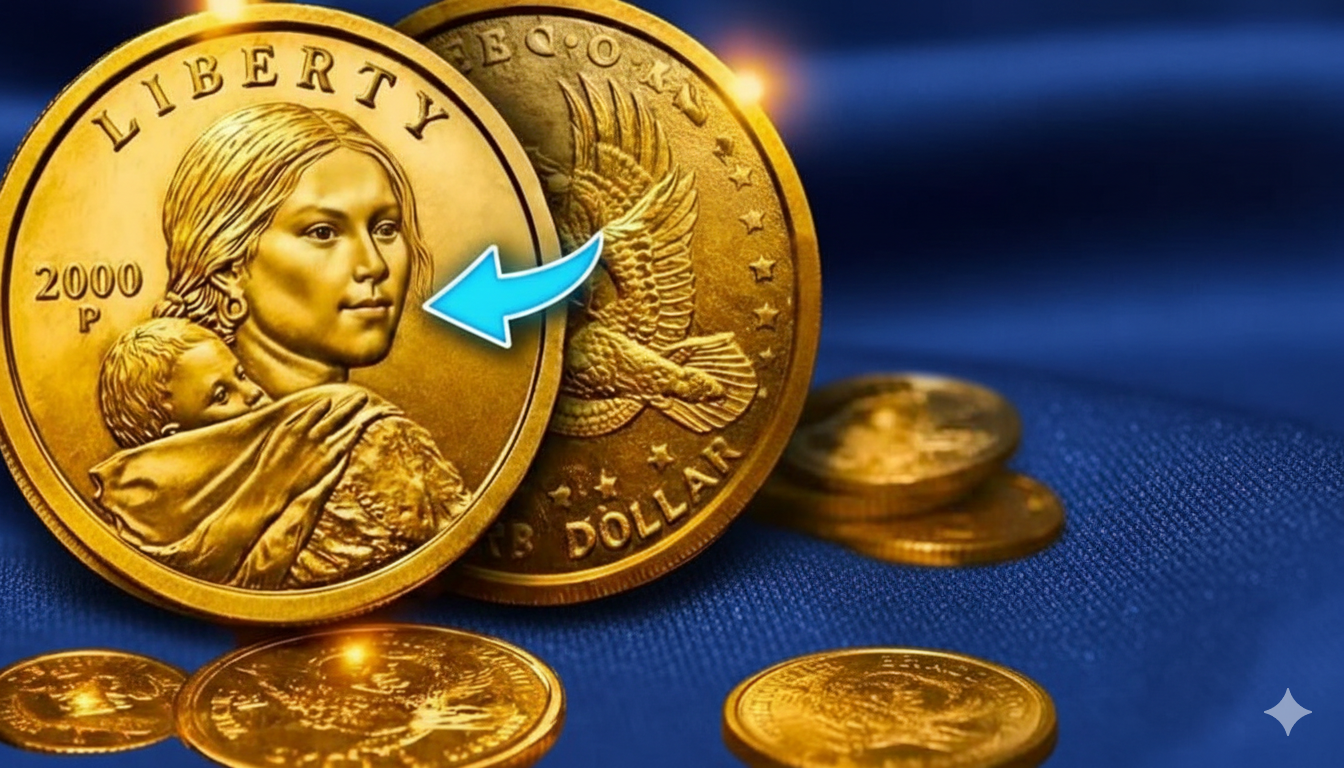
Sacagawea Dollar Value: The Sacagawea Dollar, a golden-hued coin first minted in 2000, continues to capture the imagination of collectors and history enthusiasts alike. Honoring Sacagawea, the Shoshone woman who played a vital role in the Lewis and Clark expedition, this coin stands as a tribute to her legacy and the broader narrative of exploration. Unlike typical currency, these coins hold stories within their design—from the depiction of Sacagawea carrying her son Jean Baptiste to evolving reverse designs that celebrate Native American contributions.
Understanding the Sacagawea Dollar’s Place in History
Introduced to replace the unpopular Susan B. Anthony Dollar, the Sacagawea Dollar was designed for practicality with its distinctive golden color and smooth edge. However, despite its visual appeal, the coin struggled to gain traction in everyday commerce, as Americans remained accustomed to paper dollar bills. This lack of widespread circulation ironically benefited collectors, as many high-quality uncirculated specimens were preserved. The coin’s journey reflects broader shifts in U.S. monetary policy and public habits, making it a fascinating piece of modern history.
Sacagawea Dollar Value Overview
| Coin Type / Variety | Condition / Grade | Estimated Value Range (2026) |
|---|---|---|
| Common Circulation Strike | Circulated / Good to Very Fine | Face Value ($1) |
| Common Circulation Strike | Uncirculated (MS-60 to MS-65) | $2 – $10 |
| Standard Proof Issue (S Mint) | PR-65 to PR-70 | $5 – $50+ |
| 2000-P “Cheerios” Dollar | Varies by Grade | $300 – $5,000+ |
| Significant Error Varieties | Varies by Type & Grade | $50 – $1,000+ |
| Mint State Native American Series | Uncirculated (MS-65+) | $3 – $20+ |
What Determines the Value of a Sacagawea Dollar?
For the average person, finding a Sacagawea Dollar in pocket change typically means it’s worth exactly one dollar. However, the story changes dramatically when examining specific years, mint marks, and conditions. The most famous example is the 2000-P “Cheerios” Dollar, a promotional coin distributed in cereal boxes featuring enhanced tail feather details on the eagle. These rare finds can fetch hundreds or even thousands of dollars depending on condition. Grading is essential in determining a coin’s market price. Professional graders assess coins on a scale from Poor (P-1) to Perfect Mint State (MS-70). Uncirculated examples in higher grades can range from a few dollars to over fifty dollars for pristine proof versions. Error coins—such as off-center strikes or doubled dies—also command attention and higher prices due to their uniqueness.
Collecting as a Cultural Journey
Beyond the potential financial rewards, many collectors find deeper meaning in assembling Sacagawea Dollars. Each piece represents a moment in time, connecting holders to early 2000s America and the ongoing celebration of Indigenous heritage through the Native American Dollar series launched in 2009. Building a complete collection encourages research into minting processes, historical contexts, and the artistry of coin design.
Practical Tips for Enthusiasts
For those interested in starting or expanding their collection, it is wise to examine coins carefully before spending them. While most are common, errors and special issues can hide in plain sight. Purchasing certified coins from reputable dealers ensures authenticity and fair grading. Online marketplaces and coin shows offer opportunities to connect with other enthusiasts and discover rare pieces.
Frequently Asked Questions
1. Why is the Sacagawea Dollar golden in color?
The coin’s distinct golden appearance comes from its manganese-brass composition, which consists of copper, zinc, manganese, and nickel. This was chosen to help the coin stand out from other denominations and prevent confusion with quarters.
2. How can I identify a valuable error coin?
Valuable errors include doubled dies (visible doubling in the lettering or design), off-center strikes (where the design is not properly aligned), and coins struck on the wrong planchet (using a different coin’s blank). If you suspect an error, consult a professional grading service or an experienced coin dealer.
3. Are all uncirculated Sacagawea Dollars worth keeping?
Yes, even common uncirculated coins are worth holding onto as they are in better condition than circulated ones. While their premium is modest today, they represent a preserved piece of history and may slowly appreciate over time.
4. What is the Native American Dollar series?
Starting in 2009, the reverse design of the Sacagawea Dollar was changed annually to feature different aspects of Native American history and culture. The obverse continues to feature the Sacagawea portrait. These are considered part of the same family and are actively collected.
5. Where is the best place to sell a rare Sacagawea Dollar?
Reputable options include certified coin dealers, major coin shows, and established online auction platforms that specialize in numismatics. It is highly recommended to have the coin professionally graded and authenticated before selling to ensure the best price.