Rare U.S. Quarters Worth Thousands : Many of us handle quarters every day without a second thought, viewing them merely as currency for parking meters or laundry. Yet, nestled within this everyday exchange are coins with remarkable histories and surprising worth. For collectors and curious individuals alike, the search for these numismatic treasures transforms ordinary change into a potential windfall. This guide will illuminate the key characteristics that make certain quarters valuable, blending historical context with practical advice for your own search.
Understanding What Makes a Quarter Valuable
A quarter’s value is determined by a confluence of factors far beyond its 25-cent face value. Scarcity is paramount; coins minted in low quantities due to economic conditions or historical events are naturally more sought after. Condition, or grade, dramatically impacts price, with well-preserved specimens commanding significant premiums. Unique errors that occurred during the minting process—a mis-strike, a doubled design, or a wrong metal composition—create instant rarities. Finally, historical significance and composition, such as the pre-1965 silver quarters, provide a foundational value that appeals to both collectors and precious metals investors.
The Significance of Mint Marks
A small letter on a coin tells a big story. The mint mark, found on the reverse (tails side) near the bottom, indicates which of the United States Mints produced the coin. “D” stands for Denver, “S” for San Francisco, “P” for Philadelphia (though Philadelphia coins often carried no mint mark until recently), and “W” for the West Point Mint. Production numbers varied greatly by mint and year. For instance, the 1932-D and 1932-S Washington quarters had mintages under 500,000 each, making them the crown jewels of the series and highly valuable, especially in higher grades.
Valuable U.S. Quarters Information Table
| Coin Series/Type | Key Dates/Varieties | Why It’s Valuable | Approximate Value Range (Circulated to Mint State) |
|---|---|---|---|
| Early Washington (Silver) | 1932-D, 1932-S | Extremely low mintage, first year of issue. | $100 – $15,000+ |
| Washington Silver | 1950-D/S | Overmintmark error; “D” punched over an “S.” | $500 – $10,000+ |
| Standing Liberty | 1916, 1918/7-S | Key dates with low survival rates in good condition. | $1,000 – $25,000+ |
| Barber Quarter | 1901-S, 1913-S | Key dates with very low mintages for the series. | $1,500 – $30,000+ |
| Bicentennial | 1976-S Silver Proof | 40% silver composition, special proof finish for collectors. | $5 – $15 (for silver content & collectibility) |
| State Quarter | 2004 Wisconsin Extra Leaf | Popular and well-known mint error. | $50 – $2,000+ |
| Error Coin | 1965 Silver Planchet | Struck on 90% silver blank by error. | $5,000 – $10,000+ |
| General Silver | Any quarter 1964 or earlier | 90% silver bullion content. | ~$4.50+ (based on current silver spot price) |
Key Dates and Notable Series
Throughout U.S. minting history, specific years and series have become legendary among collectors.
- The Early Washington Quarters (1932-1964): This classic series is home to the key dates: the 1932-D and 1932-S. Other notable, valuable coins include the 1936-D, the 1943-S, and the 1950-D/S overmintmark, where a “D” was stamped over an “S.”
- The Bicentennial Quarter (1975-1976): Issued to celebrate America’s 200th anniversary, these coins feature a colonial drummer on the reverse. While millions were minted, uncirculated and proof specimens, particularly those in original mint sets, hold collectible value.
- State and America the Beautiful Quarters (1999-Present): Modern quarters can be valuable due to popular errors. The most famous is the 2004 Wisconsin state quarter with an extra leaf on the corn stalk. Variations in the 2005 Minnesota “tree” quarters and certain “America the Beautiful” issues are also sought by collectors.
The Enduring Allure of Silver Composition
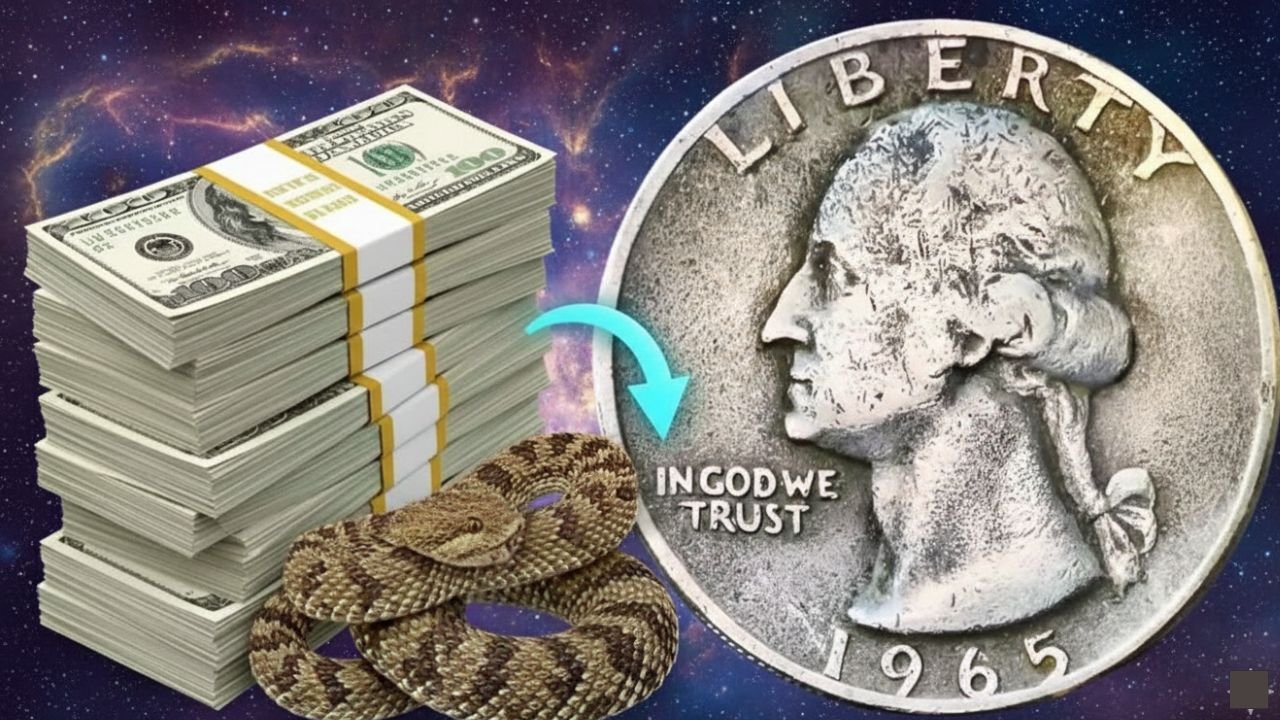
Any quarter dated 1964 or earlier is composed of 90% silver. This intrinsic metal content gives these coins a base value significantly above face value, fluctuating with the silver market. Beyond their bullion worth, transitional errors are exceptionally rare and desirable. The most famous is the 1965 quarter struck on a silver planchet (blank), intended for the 1964 coinage. These errors are worth thousands of dollars and underscore the importance of checking the edge of any quarter dated 1965—if it has a solid silver edge with no copper stripe, you may have a rare find.
Identifying Modern Errors and Varieties
The minting process is precise, but errors happen. Learning to spot them can be rewarding.
- Doubled Dies: Caused by a misaligned hub during die creation, this results in a distinct doubling of the design elements (not to be confused with common mechanical strike doubling). Examine the date, lettering, and design under magnification.
- Off-Center Strikes: Occurs when the coin blank isn’t properly centered when struck, resulting in an off-center design.
- Wrong Planchet Errors: When a coin is struck on a blank intended for another denomination, like a quarter struck on a dime planchet.
Practical Tips for the Aspiring Collector
- Examine Your Change: Make it a habit to check the date and mint mark of every quarter you receive.
- Look for Silver: Quickly check the edge of any quarter dated 1965 or earlier. A solid silver color means 90% silver; a copper-nickel cladding will show a distinct copper stripe.
- Use Tools: A simple 5x-10x magnifying glass is essential for inspecting details and potential errors.
- Handle with Care: Hold coins by the edges to avoid transferring oils from your fingers to the surfaces.
- Research and Community: Utilize reputable price guides, online forums, and local coin clubs to learn and authenticate finds.
Frequently Asked Questions (FAQ)
Q: I found an old quarter. What’s the first thing I should do?
A: First, identify the date and mint mark. Then, check the edge to see if it’s silver (pre-1965). Handle it carefully by the edges and place it in a soft holder or envelope to protect it. Avoid cleaning it, as cleaning can drastically reduce its value.
Q: Are all quarters before 1965 valuable?
A: All quarters dated 1964 and earlier contain 90% silver, so they are worth at least their melt value, which is currently several times their face value. Their numismatic (collector) value above that depends on date, mint mark, and condition.
Q: What does “proof” mean, and is it valuable?
A: Proof coins are specially struck with polished dies and blanks for collectors, resulting in a mirror-like finish. They are sold in sets by the U.S. Mint. While not all proofs are extremely valuable, they are worth more than circulating coins and silver proofs contain precious metal.
Q: Where is the best place to look for valuable quarters?
A: You can find them in everyday change, but searching rolls of quarters obtained from banks can be more efficient. Estate sales, flea markets, and inherited collections are also potential sources, but always do your research beforehand.
Q: How can I get my coin graded and authenticated?
A: Professional grading services like PCGS (Professional Coin Grading Service) or NGC (Numismatic Guaranty Company) will authenticate, grade, and encapsulate your coin in a protective holder for a fee. This is recommended for coins you believe may be high-value or rare.
The pursuit of valuable quarters is more than a search for money; it’s a tangible connection to American history, art, and craftsmanship. Each coin tells a story of its era. By cultivating a mindful eye and a bit of knowledge, you can transform the simple act of checking your change into a rewarding journey of discovery. Who knows what history you might be holding in your pocket right now?