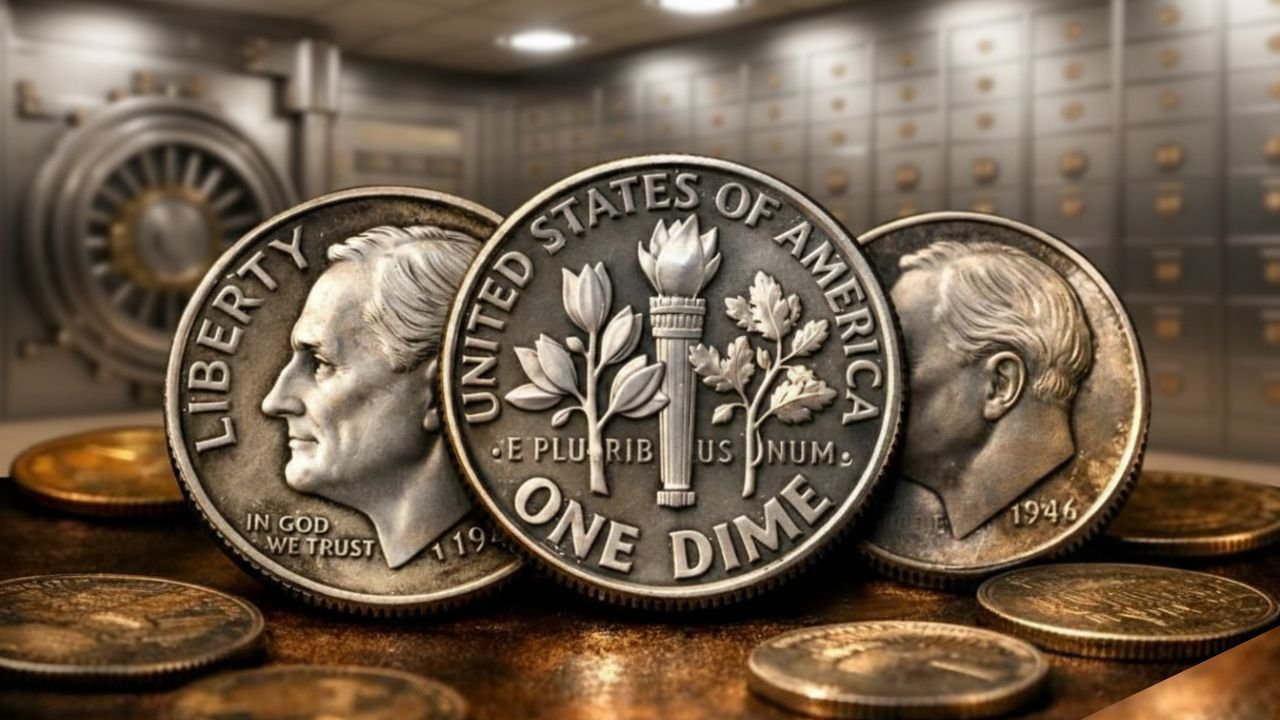
Rare Roosevelt Dimes: The Roosevelt dime, a constant in American pockets since 1946, holds far more than ten cents worth of history. Originally struck in 90% silver to honor President Franklin D. Roosevelt, this coin transitioned to copper-nickel clad in 1965, making its earlier silver issues perennial favorites. Beyond their face value, certain dimes have become numismatic treasures due to minting errors, low production numbers, or exceptional preservation. For collectors in 2026, understanding which Roosevelt dimes are rare and why is the key to building a meaningful and potentially valuable collection.
Historical Significance and Design
Introduced in the year following President Franklin D. Roosevelt’s death, the dime was a fitting tribute to a leader who founded the March of Dimes to fight polio. Chief Engraver John R. Sinnock’s design features a profile of FDR on the obverse. The reverse depicts a torch, symbolizing liberty, flanked by an olive branch for peace and an oak branch for strength and independence. This design has remained largely unchanged for over 75 years, creating a cohesive and collectible series. The 1965 shift from silver to a copper-nickel clad composition marks a significant divide, making all dimes minted from 1946 to 1964 intrinsically valuable for their silver content alone.
Roosevelt Dime Value Reference Table (2026 Estimates)
Note: Values are approximate market estimates and can vary based on auction results, eye appeal, and specific dealer pricing. “Grade” refers to the coin’s condition on the 1-70 Sheldon scale (e.g., MS-65 is Mint State 65, PR-69 is Proof 69).
| Coin Variety | Good/Very Fine (Circulated) | Extremely Fine/AU | Mint State 65 (MS-65) | Proof 65+ (PR-65+) |
|---|---|---|---|---|
| 1949-D | $2 – $5 | $10 – $25 | $150 – $400 | N/A |
| 1955 | $3 – $8 | $20 – $50 | $500 – $1,200 | N/A |
| 1964-D Doubled Die Obv. | $500 – $1,000 | $1,500 – $2,500 | $3,000+ | N/A |
| 1968 No-S | N/A | N/A | N/A | $18,000 – $30,000+ |
| 1970 No-S | N/A | N/A | N/A | $12,000 – $25,000+ |
| 1982 No-P | $50 – $150 | $200 – $500 | $1,000 – $2,500+ | N/A |
| 1996-W | N/A (Not circulated) | N/A | N/A | $25 – $100 |
Noteworthy and Valuable Roosevelt Dime Varieties
While most Roosevelt dimes are common, specific dates and mint errors are highly sought after. Their value is dictated by a combination of rarity, condition (grade), and collector demand.
The 1949-D Dime
Struck at the Denver Mint, the 1949-D issue had a relatively modest mintage compared to other early years. While not exceedingly rare in circulated grades, it becomes scarce in high mint state condition. Collectors prize examples with full mint luster and sharp strikes, as they represent a challenging find from the early post-war era of the series.
The 1955 Dime
The 1955 Philadelphia-minted dime is one of the key circulation strikes in the series due to its low mintage. Well-preserved, uncirculated examples are difficult to locate, making them a cornerstone for advanced collections. Its value lies in its genuine scarcity in the higher grades that collectors desire.
The 1964-D Doubled Die Obverse
This notable error coin exhibits clear doubling, particularly in the inscriptions “IN GOD WE TRUST” and “LIBERTY.” Caused by a misalignment in the die-making process, these dimes were struck and entered circulation. Today, they are celebrated as one of the major error varieties of the series, with sharp-eyed collectors sometimes still finding them in old rolls or collections.
The 1968 and 1970 No-S Proof Dimes
Among the most legendary modern U.S. coin errors, these proof dimes were struck at the San Francisco Mint but accidentally omitted the “S” mint mark. Only a few specimens of each are known to exist. As such, they are crown jewels of the Roosevelt series, regularly achieving five- and six-figure prices at auction due to their extreme rarity and status.
The 1982 No-Mint Mark Dime
In 1982, a small number of dimes were produced at the Philadelphia Mint without the expected “P” mint mark. These coins entered general circulation, creating a modern rarity accessible to anyone. Finding one in change would be a remarkable discovery, and even circulated examples carry a significant premium over face value.
The 1996-W Roosevelt Dime
Minted at the West Point Mint to commemorate the series’ 50th anniversary, the 1996-W dime was only available in special Mint sets. Its “W” mint mark is unique to this issue, and its limited availability makes it a desirable modern collectible, especially in pristine proof condition.
Building a Thoughtful Roosevelt Dime Collection
A rewarding approach to collecting can take many forms. Some enthusiasts pursue a “date and mint mark” set, aiming for one of every year from each mint. Others focus on the silver era (1946-1964) or seek out high-grade examples of key dates like the 1955. “Coin roll hunting”—searching through rolls of dimes from the bank—remains a popular and affordable way to look for the 1982 no-P or other errors. For major rarities, reputable coin dealers, established auction houses, and national coin shows are the best venues, ensuring authenticity and proper grading.
Essential Practices Grading, Authentication, and Care
For any coin of value, professional grading by services like PCGS or NGC is highly recommended. They encapsulate the coin in a tamper-evident holder with a definitive grade, which protects it and establishes its market value. Always store coins in a cool, dry place using archival-quality materials, such as inert plastic flips or albums. Handling should be minimal and by the edges to prevent oils and abrasions from damaging the surfaces.
Frequently Asked Questions (FAQ)
Q: What makes a Roosevelt dime valuable?
A: Value is driven by rarity (low mintage or errors), condition (grade), and demand. Silver content adds intrinsic value to dimes minted in 1964 and earlier.
Q: Are all silver Roosevelt dimes worth a lot of money?
A: While their silver melt value (currently around $1.50-$2.00) exceeds face value, most circulated silver dimes are not numismatically rare. Their worth is primarily in their precious metal content unless they are a key date or in exceptional condition.
Q: Where is the mint mark on a Roosevelt dime?
A: For coins minted from 1946 to 1964, the mint mark (“D” for Denver, “S” for San Francisco) is found on the reverse, to the left of the base of the torch. From 1968 onward, it is located on the obverse, above the date.
Q: What is the most valuable Roosevelt dime?
A: The 1968 No-S proof dime is generally considered the rarest and most valuable, with auction prices regularly surpassing $20,000 for high-grade examples. The 1970 No-S proof is a close second.
Q: How should I start collecting Roosevelt dimes?
A: Begin by learning to identify dates, mint marks, and basic errors. Acquire a Whitman folder or album and start searching your change. Joining a local coin club or online forum can provide valuable knowledge and community support.
Q: Is collecting Roosevelt dimes a good investment?
A: While some rare coins have appreciated significantly, collecting should first be driven by passion and historical interest. Treat any potential financial return as a long-term prospect and focus on acquiring certified, high-quality coins from reputable sources.
The journey through the Roosevelt dime series is a passage through modern American history, offering challenges for the completist and the thrill of the hunt for the error-seeker. Whether you’re drawn to the warmth of historic silver or the intrigue of a modern minting mistake, these ubiquitous coins hold stories and value far beyond their stated denomination.