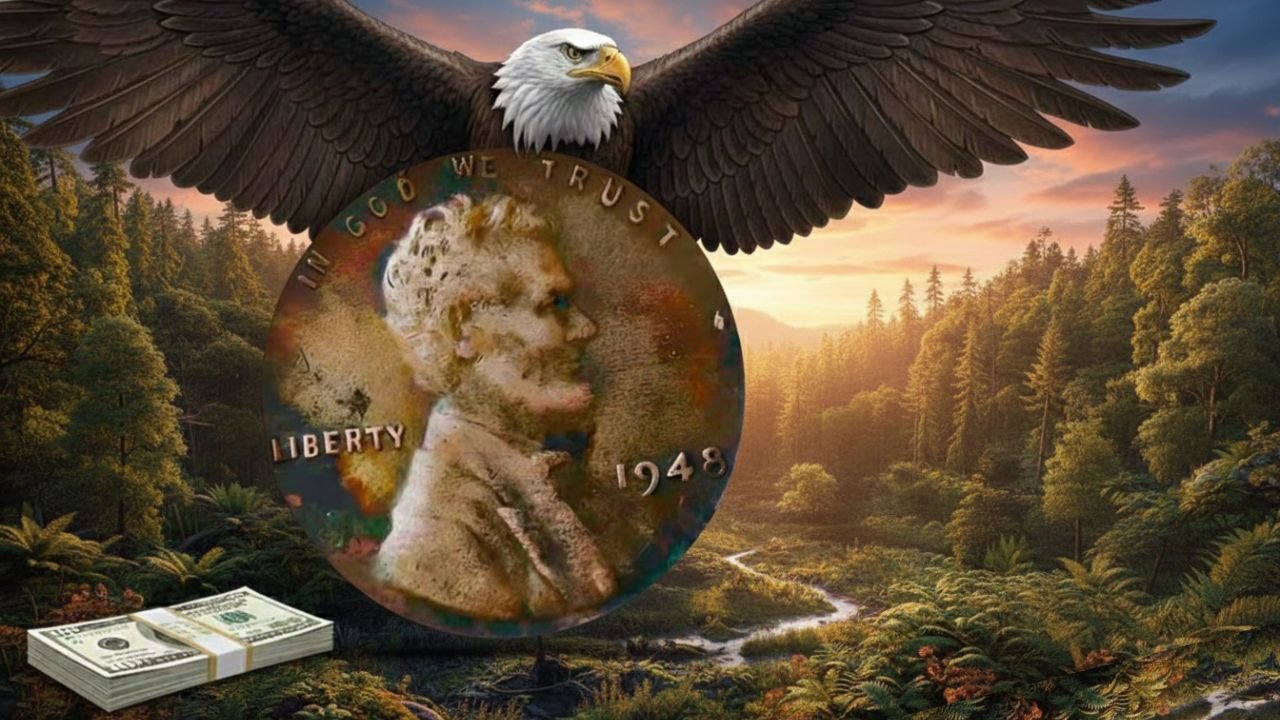
Rare Lincoln Wheat Pennies: For many, a penny is merely spare change. For collectors, it can be a window into history and, in extraordinary cases, a hidden treasure. The Lincoln Wheat Penny, with its simple stalks of wheat framing the words “ONE CENT,” circulated for nearly half a century and remains one of America’s most collected coins. While most are common, a handful of rare dates and errors command astonishing values, turning the humble cent into a object of fascination and high-stakes discovery.
The Story Behind the Design
Introduced in 1909 to commemorate the 100th anniversary of Abraham Lincoln’s birth, this penny was groundbreaking. It was the first regular-issue U.S. coin to feature the portrait of an actual person, a tribute to the beloved president. Sculptor Victor David Brenner created the enduring obverse portrait. The reverse, featuring two stylized wheat stalks, symbolized national prosperity and gave the coin its familiar name. This design persisted until 1958, embedding itself in the everyday life of a nation through two World Wars and the Great Depression, making it a tangible piece of American heritage.
Lincoln Wheat Penny Key Information Table
| Attribute | Details |
|---|---|
| Years Minted | 1909 to 1958 |
| Designer | Victor David Brenner |
| Metal Composition | 95% Copper, 5% Tin/Zinc (1909-1942, 1944-1958) |
| Wartime Composition | Zinc-Coated Steel (1943) |
| Mint Marks | D (Denver), S (San Francisco), None (Philadelphia) |
| Obverse Design | Portrait of Abraham Lincoln |
| Reverse Design | Two wheat stalks encircling “ONE CENT” and “UNITED STATES OF AMERICA” |
| Key/ Rare Dates | 1909-S VDB, 1914-D, 1922 Plain (No D), 1931-S, 1943 Bronze, 1944 Steel, 1955 Doubled Die |
| Average Circulated Value | Typically $0.05 to $1.00 for common dates |
| Highest Auction Record | Over $1.7 million for a 1943 Bronze Cent |
What Makes a Penny Valuable?
Understanding why some wheat pennies are worth fortunes while others are worth a cent requires knowing a few key principles of numismatics.
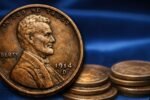
- Mintage and Survival Rates: Coins produced in very small quantities are inherently scarce. If few were saved in good condition over the decades, their value soars. Years like 1909-S VDB and 1931-S are prime examples.
- Minting Errors: Mistakes at the mint often create unique, one-of-a-kind collectibles. The most famous are the 1943 bronze cents and 1944 steel cents, born from the metal conservation efforts of World War II.
- Condition is Paramount: A coin’s state of preservation is critical. A penny worn smooth from circulation holds minimal value, while the same coin in pristine, mint-state condition can be worth thousands. Professional grading services assess this on a 1-70 point scale.
- Historical Significance: Coins from pivotal years, like the first year of issue (1909) or the wartime transition years, carry a narrative that amplifies collector interest.
Notable Lincoln Wheat Penny Varieties
While countless varieties exist, a few stand out for their legendary status and record-breaking auction results.
- The 1909-S VDB: The “Holy Grail” for many collectors. This first-year issue from the San Francisco mint features Brenner’s initials (VDB) on the reverse. With a mintage of just 484,000, it is the key coin to the series, especially in high grades.
- The 1943 Bronze Cent: In 1943, pennies were struck on zinc-coated steel to save copper for the war effort. A few bronze planchets from 1942 were accidentally left in the presses and struck, creating perhaps the most famous error coin in U.S. history. Examples have sold for over $1 million.
- The 1944 Steel Cent: The opposite error occurred in 1944 when the mint returned to copper planchets. A few leftover steel blanks were used by mistake, creating another extremely rare and valuable coin.
- The 1955 Doubled Die: A dramatic misalignment during the die creation process resulted in a clearly doubled obverse inscription. This striking error is highly sought-after and valuable even in circulated grades.
How to Begin Your Search
The thrill of the hunt is a central part of coin collecting. If you’re inspired to look through old jars or collections, here’s a sensible approach.
- Sort by Date: Begin by separating pennies minted between 1909 and 1958. Look closely at the dates of key coins mentioned above.
- Check the Mint Mark: Look under the date on the obverse (heads) side. A “D” or “S” indicates it was minted in Denver or San Francisco, which often adds value.
- Examine for Errors: Use a magnifying glass to look for doubling in the lettering, off-center strikes, or unusual features.
- Assess Condition Honestly: Be critical. Heavy wear significantly reduces value. Look for coins with full details and original luster.
- Consult Reliable Resources: Use a current price guide or reputable website for valuation. For any potential rare find, seeking authentication from a professional grading service like PCGS or NGC is a wise investment.
Frequently Asked Questions (FAQ)
Q: I found a 1943 penny that isn’t silver. Is it valuable?
A: Yes, potentially extremely valuable. 1943 pennies should be silver-colored (zinc-coated steel). If you have a 1943 that is copper-brown, it could be the rare bronze error. Have it authenticated immediately.
Q: What does “VDB” stand for?
A: VDB are the initials of the coin’s designer, Victor David Brenner. They appeared on the reverse of some 1909 pennies. Public debate over their prominence led to their removal for most of the series, making the 1909-S VDB especially scarce.
Q: Are all wheat pennies valuable?
A: No. The vast majority of Lincoln Wheat Pennies, particularly those from the 1940s and 1950s, are common and worth between 5 cents and a dollar in typical circulated condition. Value comes from specific dates, mint marks, errors, and superb condition.
Q: How should I store and handle valuable coins?
A: Always hold a coin by its edges. To preserve value, store coins in inert plastic holders (like Mylar flips) or archival-quality albums. Avoid PVC plastic, as it can damage coins over time.
Q: Where is the best place to sell a rare wheat penny?
A: For a potentially high-value coin, consider reputable auction houses that specialize in coins, established coin dealers, or certified online marketplaces. Getting the coin professionally graded and encapsulated first often yields the best return.
The True Reward of Collecting
While the dream of finding a million-dollar penny is captivating, the true value of collecting Lincoln Wheat Pennies often lies in the connection to history. Each coin passed through the hands of Americans across decades, witnessing the evolution of a country. Building a collection, learning the stories behind key dates, and appreciating the art of minting are rewarding pursuits in themselves. Whether you discover a rare error or simply complete a date set, you are preserving and honoring a tangible piece of the American story, proving that great significance can indeed come in the smallest of denominations.