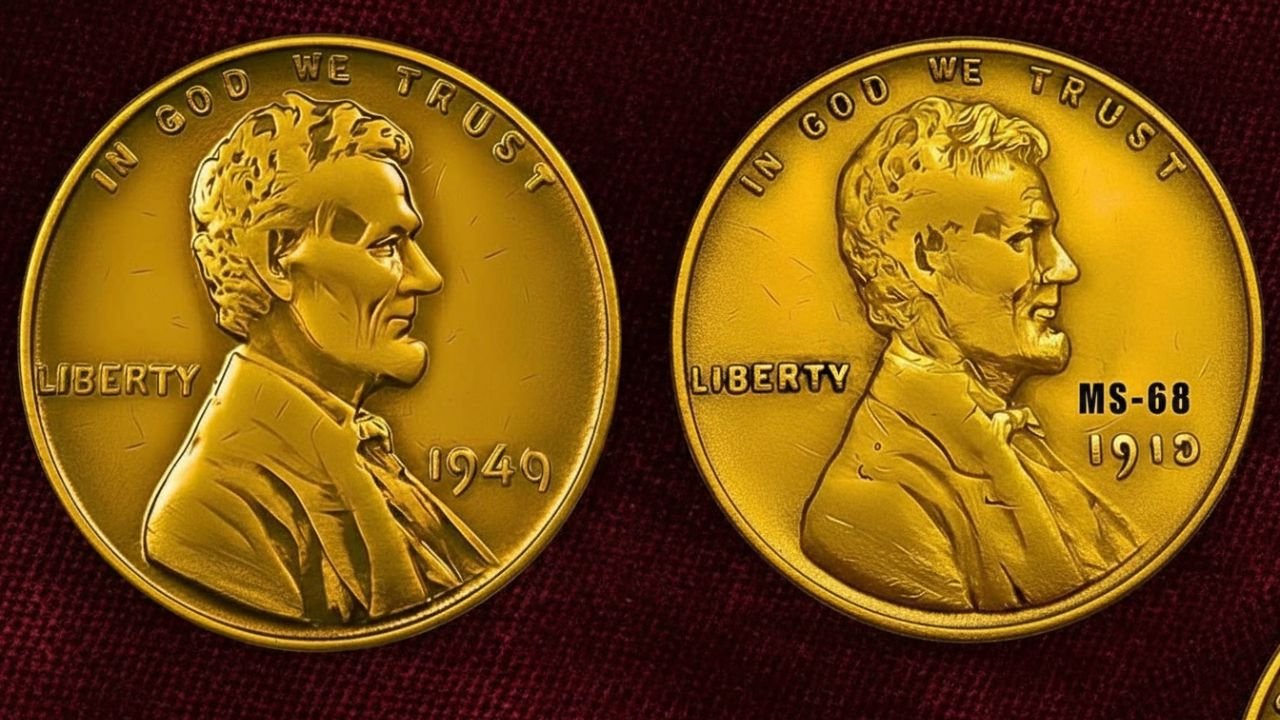
Complete Wheat Penny Value: There’s a certain magic in the act of sorting through old coins. The metallic clink, the worn-down edges, and the fading portraits speak of a time long passed. Among the most beloved pieces of American pocket change is the Lincoln Wheat Penny. More than just a one-cent piece, it’s a tangible link to over half a century of American history, a treasure hunt waiting to happen in an old jar or a forgotten drawer.
A Century-Old Design with a Story to Tell
The story of the Wheat Penny begins in 1909, a year that marked a departure from tradition in American coinage. For the first time, the portrait of a real historical figure—the beloved President Abraham Lincoln—appeared on a regular-issue coin, honoring what would have been his 100th birthday. The design was the work of sculptor Victor David Brenner. On one side, Lincoln sits in quiet dignity, while the reverse features two elegant wheat stalks, a symbol of the nation’s agricultural strength and prosperity. This iconic “wheat reverse” remained in production until 1958, creating a rich and varied series that continues to captivate collectors today. While many of these pennies are common, a select few, marked by unique dates, minting locations, or fascinating errors, have become legendary, their value soaring far beyond their humble one-cent denomination.
More Than Metal A Chronicle of American History
The Wheat Penny’s history is a fascinating reflection of America’s own journey. It was born during an era of industrial growth and lasted through two World Wars and the economic boom of the 1950s. Perhaps its most dramatic chapter came in 1943, when copper, a critical wartime material, was needed for ammunition and communication wires. The U.S. Mint responded by striking pennies from zinc-coated steel. These silver-hued “steel pennies” are a common find, but a tiny number of copper planchets from 1942 were accidentally left in the presses, creating the legendary and extraordinarily valuable 1943 Copper Penny. This single error, born of wartime necessity, stands as one of the most famous rarities in all of American numismatics, a perfect example of how history can hide in plain sight.
The Hunt for Key Dates and Valuable Errors
For the modern collector, the thrill lies in the hunt. Certain dates and mint marks are the “holy grails” of the series. The 1909-S VDB, for instance, is a must-have for any serious collection. Struck in San Francisco (“S” mint mark), it bears Brenner’s initials (“VDB”) on the reverse. When the public complained about the prominence of the initials, they were quickly removed, making this initial run a low-mintage classic. Similarly, the 1914-D from the Denver Mint is scarce due to a very small production run. Then there are the fascinating errors, like the 1922 “No D” penny, where a worn die in Denver failed to stamp the mint mark, creating a valuable oddity. And of course, the 1955 Doubled Die Obverse, where a misalignment in the minting process created a dramatic, ghost-like doubling of the date and lettering, is one of the most visually striking and sought-after error coins in history.To give you a clearer picture, here’s a look at some of these famous coins and their general value range. It’s important to remember that the final price of a coin is dramatically affected by its condition, or “grade.”
| Key Date / Variety | Mint Mark | Key Feature & Rarity | Approximate Value Range (Circulated to Mint State) |
|---|---|---|---|
| 1909-S VDB | San Francisco | Low mintage; Designer’s initials on reverse | $700 – $2,000+ |
| 1914-D | Denver | Very low mintage from the Denver Mint | $150 – $5,000+ |
| 1922 “No D” | (None) | Mint mark missing due to worn die; a major error | $500 – $10,000+ |
| 1931-S | San Francisco | Low mintage, key to the series | $60 – $500+ |
| 1943 Bronze/Copper | (Various) | Struck on a bronze planchet by mistake; extremely rare | $100,000 – $250,000+ |
| 1944 Steel | (Various) | Struck on a steel planchet by mistake; rare counterpart to 1943 | $50,000 – $100,000+ |
| 1955 Doubled Die | Philadelphia | Dramatic doubling of obverse lettering and date | $1,000 – $15,000+ |
The Critical Role of Grading and Market Trends
Understanding a coin’s value isn’t just about the date; it’s about its state of preservation. Two coins from the same year can be worth vastly different amounts based on wear and tear. This is where professional coin grading comes in. Independent services evaluate a coin’s condition on a scale, assigning a grade like “Good,” “Fine,” or the coveted “Mint State.” A professionally graded and “slabbed” coin provides authenticity and a guaranteed level of quality, giving both buyers and sellers confidence in a fair transaction. Over the years, the market for these key-date Wheat Pennies has generally shown steady growth. The rise of online auctions has connected buyers and sellers globally, increasing competition and, in many cases, driving prices to new heights for the finest examples.
The Real Treasure The Joy of Discovery and Connection
What truly keeps the spirit of Wheat Penny collecting alive is the simple, enduring possibility of discovery. It’s the thought that a valuable 1922 “No D” or a pristine 1931-S could be hiding in a collection passed down from a grandparent, or even lurking in a roll of pennies from the bank. These stories of unexpected finds are not just folklore; they happen, and they inspire a new generation of hobbyists to look a little closer. The real value, however, often transcends the financial. Each Wheat Penny is a miniature time capsule. Holding a 1910 penny is to connect with the world of a century ago. It fosters an appreciation for craftsmanship, history, and the quiet stories that everyday objects can tell. In that sense, collecting these coins becomes both a personal journey and an educational pursuit, where the true worth is measured in the connection to the past as much as in any price guide.
Frequently Asked Questions (FAQ)
1. How can I tell if my Wheat Penny is valuable?
Start by looking at the date and mint mark (a small letter “D” for Denver or “S” for San Francisco below the date). Compare it to a list of known key dates and varieties, such as the ones in the table above. Check for any unusual features like doubling in the lettering, a missing mint mark, or a wrong color (like a 1943 penny that isn’t silvery). The condition is also crucial—coins with sharp details and little wear are worth more.
2. What is the most valuable Wheat Penny?
The undisputed king is the 1943 Bronze (or Copper) Lincoln Cent. Only a handful are known to exist, and they have sold for over $200,000 and even as high as $1.7 million in pristine condition. Its counterpart, the 1944 Steel Cent, is also extremely rare and valuable.
3. Why is the 1909-S VDB penny so special?
Its fame comes from a combination of low mintage, a design controversy, and its status as the first year of the series. The “VDB” refers to the designer’s initials, which were placed prominently on the reverse and then quickly removed. The San Francisco mint produced the fewest of these initial-design coins, making it a key coin for any collection.
4. Does “coin grading” mean I have to send my coin away?
For a truly accurate value, especially if you suspect you have a rare coin, professional grading is the best path. Companies like PCGS or NGC will authenticate, grade, and encapsulate the coin in a protective holder. This “slabbing” process verifies its authenticity and condition, which is essential for insurance or selling it for top dollar.
5. Is it worth keeping common Wheat Pennies in good condition?
Absolutely! While common dates in circulated condition might only be worth 5 to 15 cents each, they are the foundation of any collection. They are wonderful for learning to grade, studying different date strikes, and filling albums. As the years pass, even common dates in high, uncirculated condition are becoming harder to find and are increasing in value.