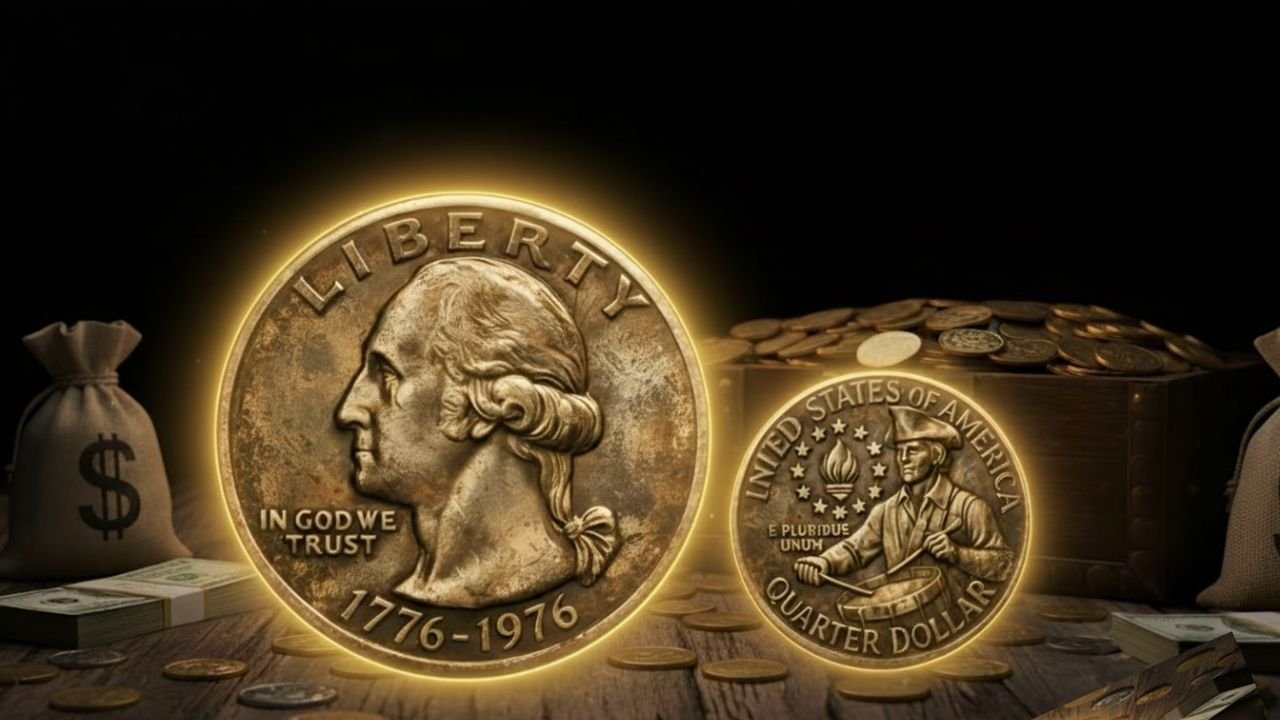
Bicentennial Quarter Value Guide: The year 1976 marked two hundred years of American independence, and the United States Mint chose to honor this milestone with a series of commemorative coins that would find their way into millions of pockets, cash registers, and eventually, collections across the country. Among these, the Bicentennial quarter stands as perhaps the most recognized, its colonial drummer design a quiet tribute to the nation’s revolutionary beginnings. What many don’t realize is that within this seemingly ordinary pocket change lies a world of numismatic variety, historical significance, and surprising value that continues to captivate collectors decades later.
Understanding the Bicentennial Quarter’s Place in American History
When the United States Mint announced a redesign of the quarter, half dollar, and dollar coin for the nation’s Bicentennial, it marked the first time since 1932 that the Washington quarter would feature anything other than the familiar eagle reverse. Jack L. Ahr’s design depicting a colonial drummer with a torch of victory and thirteen stars representing the original colonies brought fresh energy to American coinage. The dual dating “1776–1976” created a unique bridge between the nation’s founding and its bicentennial celebration, making these coins instantly recognizable and deeply symbolic. The production figures for Bicentennial quarters are staggering, with over 1.6 billion struck across the Philadelphia and Denver mints for circulation, plus additional millions produced in special collector formats. This abundance means that finding a Bicentennial quarter isn’t difficult, but understanding what separates a common twenty-five cent piece from a valuable collectible requires looking closer at the details that many overlook.
The Silver Connection More Than Just Pocket Change
Among the most significant distinctions in Bicentennial quarters is the metal composition. While the vast majority were struck in the standard copper-nickel clad format used for circulating coinage since 1965, the Mint also produced special 40% silver versions intended specifically for collectors. These silver issues were never released into general circulation, instead packaged in three-piece proof sets and uncirculated mint sets that were sold to the public.The silver Bicentennial quarters carry an inherent value beyond their collectible appeal. With approximately 0.0739 troy ounces of silver content, each silver quarter’s melt value fluctuates with precious metal markets, typically ranging between three and six dollars based on current silver prices. However, collectors have long recognized that pristine examples in their original government packaging deserve premiums far exceeding their bullion value. What many newer collectors find surprising is that the Mint produced two distinct varieties of silver Bicentennial quarters. The uncirculated versions struck at the San Francisco Mint display a satin-like finish with sharp but not mirror-like details, while the proof issues feature deeply mirrored fields and frosted devices achieved through specially polished dies. Both formats have dedicated followings among collectors, with the proof versions generally commanding higher prices due to their visual appeal and more limited production.
The Hidden World of Mint Errors and Varieties
Perhaps the most exciting aspect of Bicentennial quarter collecting lies in the realm of mint errors and die varieties. These unintentional anomalies, created during the striking process, transform common coins into rare treasures that can be worth hundreds or thousands of times their face value.Doubled die varieties appear when a die receives an offset impression during the hubbing process, causing design elements to appear doubled when viewed under magnification. On Bicentennial quarters, collectors have identified several distinct doubled die varieties on both the obverse and reverse. The doubling might appear on the lettering, the drummer’s arm, or the torch flame, each variation carrying different rarity levels and corresponding values. Off-center strikes occur when a planchet shifts during the striking process, resulting in a coin with design elements missing from one side and a portion of blank planchet visible on the other. The value of off-center strikes depends largely on the percentage of design missing and whether the date remains visible. A Bicentennial quarter struck 10% off-center with a full date might sell for fifty to one hundred dollars, while dramatic 50% off-center examples can bring five hundred dollars or more from error coin specialists. Perhaps the most valuable error variety involves coins struck on incorrect planchets. Occasionally, Bicentennial quarter dies would strike foreign planchets, dime planchets, or even experimental materials that found their way into the production line. These transitional errors are exceptionally rare and highly sought after. A Bicentennial quarter struck on a Canadian quarter planchet or a dime planchet represents the kind of discovery that makes error collecting so compelling.
Condition and Grading The Language of Value
Understanding how condition affects value requires familiarity with the standardized grading system used throughout the numismatic community. A coin’s grade represents a consensus assessment of its preservation level, with professional services like PCGS and NGC providing encapsulated certification that commands premium prices in the marketplace. Circulated Bicentennial quarters that have spent decades moving from hand to hand typically grade in the Good to Very Fine range. These coins show obvious wear on the high points of the design, particularly the drummer’s knee and the torch, but remain fully identifiable. While such examples satisfy casual collectors building inexpensive sets, they rarely command significant premiums over face value.
Bicentennial Quarter Value Reference Table
| Variety | Composition | Mint Mark | Approximate Mintage | Condition Range | Estimated Value Range |
|---|---|---|---|---|---|
| Circulated Clad | Copper-nickel clad | None or D | 1.6+ billion | Good-VF | $0.25-$1.00 |
| Uncirculated Clad | Copper-nickel clad | None or D | Included above | MS-60 to MS-65 | $5-$20 |
| Gem Uncirculated Clad | Copper-nickel clad | None or D | Scarce | MS-66 to MS-67+ | $50-$400 |
| Silver Uncirculated | 40% silver | S | 11 million | MS-60 to MS-69 | $10-$150 |
| Silver Proof | 40% silver | S | 7 million | PR-60 to PR-69 | $15-$300 |
| Perfection Silver Proof | 40% silver | S | Very rare | PR-70 DCAM | $1,000-$4,500+ |
| Doubled Die Obverse | Various | Various | Unknown | Varies by severity | $100-$2,000+ |
| Major Off-Center Strike | Various | Various | Rare | 20%+ off-center | $300-$1,500+ |
| Wrong Planchet Error | Various | Various | Extremely rare | Varies by coin | $2,000-$20,000+ |
| Missing Mint Mark Proof | 40% silver | None | Extremely rare | PR-65+ | $3,000-$15,000+ |
Building a Collection: Approaches and Strategies
The accessibility of Bicentennial quarters makes them an excellent entry point for new collectors, while the depth of available varieties provides ongoing challenges for seasoned numismatists. How one approaches collecting these coins depends largely on personal interests and collecting goals.Some collectors pursue complete date and mint mark sets of all Bicentennial denominations, including the quarter, half dollar, and dollar in both clad and silver compositions. This approach provides historical context and allows collectors to appreciate how the Bicentennial theme was expressed across different denominations. Assembling such a set in high uncirculated or proof condition requires patience and reasonable investment but remains achievable for most collectors.Others focus specifically on the silver Bicentennial quarters, seeking examples in their original government packaging. Original Mint Sets and Proof Sets from 1976 contain silver quarters alongside their half dollar and dollar counterparts, preserved exactly as they left the San Francisco Mint. These intact sets have become increasingly desirable as collectors recognize that original packaging provides provenance and ensures authenticity.Error coin specialists approach Bicentennial quarters with magnification and reference guides, systematically examining every example they encounter for unusual characteristics. This approach requires more knowledge and patience but offers the greatest potential for significant discoveries. The collector who finds a major doubled die variety or dramatic off-center strike in pocket change experiences the thrill that drives numismatic passion.
Remarkable Discoveries and Auction Records
The numismatic community has documented numerous instances of extraordinary Bicentennial quarter discoveries that demonstrate the potential hidden within this series. In 2019, a collector submitted a Bicentennial quarter struck on a 40% silver planchet intended for the San Francisco Mint but somehow released into circulation through the Denver Mint. This transitional error, authenticated and graded by PCGS, realized more than sixteen thousand dollars at auction. Proof Bicentennial quarters missing the expected San Francisco mint mark have also commanded substantial prices. While most proof examples carry the “S” mint mark, a small number escaped the minting process without this identifying feature. Whether these represent filled dies or other production anomalies remains debated, but their scarcity has driven prices into the five-figure range for pristine specimens. Even among standard silver proofs, exceptional preservation commands recognition. A Bicentennial silver proof quarter graded PR-70 Deep Cameo with all design elements perfectly struck and no visible contact marks sold for over four thousand dollars in a 2021 auction. This price reflects not the coin’s rarity in terms of mintage numbers, but its rarity in achieving absolute perfection through the minting and preservation process.
Market Dynamics and Long-Term Value
The market for Bicentennial quarters has demonstrated remarkable stability over the decades, with certain segments showing consistent appreciation. Silver issues benefit from dual demand sources: collectors seeking numismatic quality and investors attracted to precious metal content. This dual demand often provides price support even during broader market fluctuations. Error varieties follow different market dynamics, with values driven primarily by collector demand and the frequency with which specific errors appear at auction. Some error types that were considered exceptionally rare twenty years ago have become somewhat more available as collectors search more systematically and submit more coins for certification. However, truly exceptional errors like off-metal strikes and major die breaks remain genuinely scarce and have maintained or increased their value over time. The certified coin market has particular relevance for Bicentennial quarters, with third-party grading providing the confidence necessary for significant financial transactions. A raw coin that might sell for one hundred dollars at a coin show could realize three hundred dollars or more in a PCGS holder graded MS-67, with the certification providing both authentication and grade assurance that buyers value.