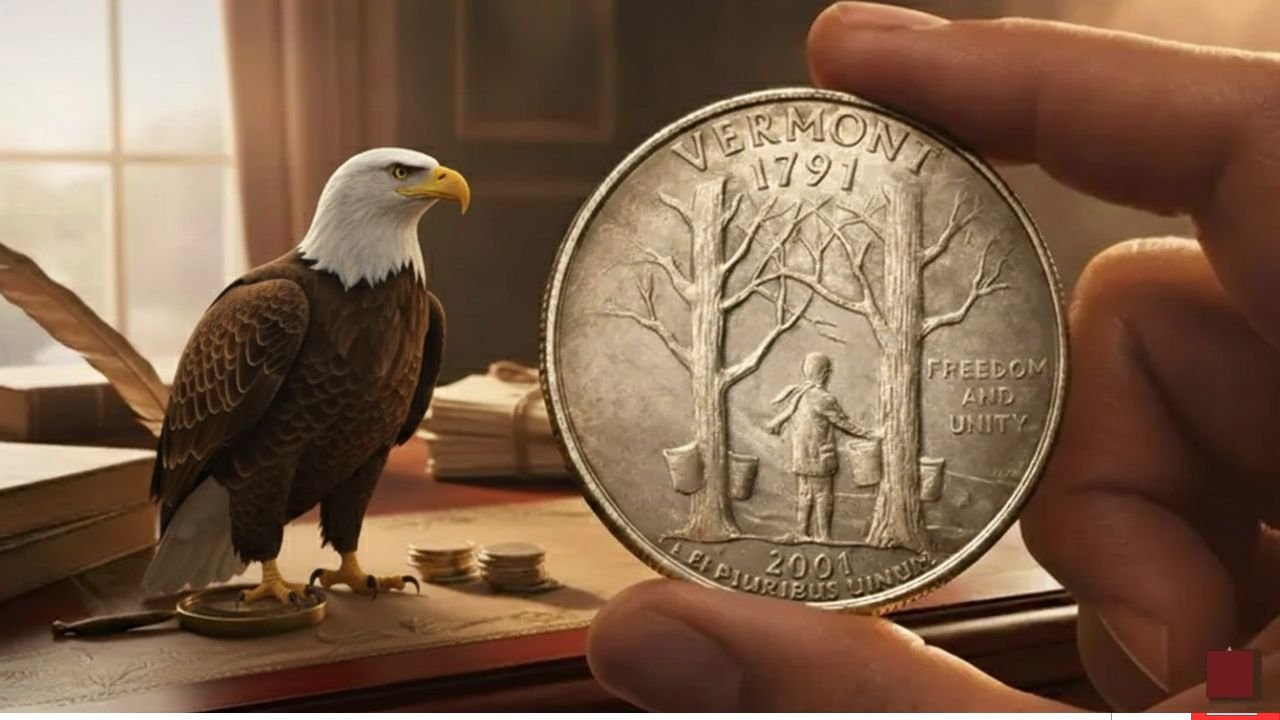
2026 State Quarters Value Guide : More than a decade after the final quarters were minted, the 50 State Quarters Program remains a beloved chapter in American numismatics. Running from 1999 to 2008, with an extension for territories in 2009, this initiative transformed everyday currency into a canvas for national storytelling. It sparked a collecting renaissance, encouraging people from all walks of life to appreciate the art and history in their pockets. Today, the market for these coins has settled into a mature phase, where knowledge and condition are the true keys to value, making it an excellent time for both new and seasoned collectors to engage with this iconic series.
The Program That Made America Collect
The State Quarters Program achieved something remarkable: it democratized coin collecting. By releasing five new state designs each year in the order of statehood, the U.S. Mint created a slow, engaging national treasure hunt. People checked their change not just for spending, but for discovering—whether it was the stark beauty of Arizona’s Grand Canyon or the detailed outline of Texas. This approach turned quarters into miniature history and geography lessons, fostering a shared hobby that connected generations. Its success proved that circulating currency could also serve as a powerful educational tool and a unifying cultural project.
What Makes a State Quarter Valuable?
While billions of these quarters were produced, creating a plentiful supply, certain factors can elevate a coin far beyond its 25-cent face value. Understanding these areas is crucial for any collector.

- Exceptional Condition: For modern coins, grade is everything. A quarter that has never been in circulation and is flawless under magnification can be worth a significant premium. Coins graded MS67 or higher by professional services like PCGS or NGC are particularly sought after.
- Special Mint Products: The U.S. Mint sold proof and 90% silver proof sets directly to collectors. These coins, especially the silver versions, have intrinsic precious metal value and were struck with exceptional detail, making them more valuable from the outset.
- Notable Errors: Some quarters left the mint with unique mistakes. The most famous is the 2004 Wisconsin quarter with an extra leaf on the cornstalk. Such error coins, when authenticated, can command high prices from specialists.
- Key Dates and Completeness: Early years of the program, like 1999, sometimes have slightly lower mintages in top grades. Furthermore, a complete, certified set of all 56 designs (including territories) in high grade holds more value than individual common coins.
State Quarters Program Essential Reference Table
| Attribute | Details |
|---|---|
| Program Name | 50 State Quarters Program |
| Years of Issue | 1999 – 2008 (States), 2009 (District of Columbia & U.S. Territories) |
| Total Number of Designs | 56 (50 States + 6 for D.C. & Territories) |
| Standard Composition | Cupro-Nickel Clad (Outer layers: 75% Copper, 25% Nickel bonded to a pure copper core) |
| Special Strikes | 90% Silver Proofs (sold in annual sets by the U.S. Mint) |
| Release Schedule | 5 new state designs per year, released approximately every 10 weeks. |
| Typical Circulation Mintage | Ranged from about 400 million to over 1.4 billion per design. |
| Primary Value Drivers | 1. Certified Grade (MS/PR 67 and above) 2. Precious Metal Content (Silver Proofs) 3. Verified Error Varieties 4. Complete Sets in Original Mint Packaging |
| Current Market (2026) | Mature and stable. Circulated coins are largely face value, while certified rarities and pristine sets show steady collector demand. |
Navigating the Modern Market
The collecting landscape for state quarters has evolved significantly since the program ended. The initial rush to fill maps and albums has cooled, giving way to a more nuanced market. Common, circulated quarters are readily available, but this has only heightened the demand for superb, gem-quality examples. There is a clear and growing appreciation for coins that have been preserved in absolute mint state. Furthermore, original U.S. Mint proof and silver proof sets have become cherished artifacts, often appreciating as complete annual collections. In 2026, success in collecting is less about finding any quarter and more about identifying the right quarter in the best possible condition.
Building a Meaningful Collection Today
For those inspired to start or refine a collection, a focused strategy leads to greater satisfaction and potential value.
- Quality Over Quantity: Invest in a few coins in outstanding condition rather than many worn examples. A single MS67 coin is often more valuable and display-worthy than 50 circulated ones.
- Embrace Certification: Coins graded by NGC or PCGS come in protective, tamper-evident holders with verified grades. This removes guesswork, assures authenticity, and enhances resale value.
- Find Your Niche: Instead of trying to collect everything, specialize. You might focus on achieving a top-grade set for your birth year, collecting all the silver proofs, or hunting for interesting error coins. This makes the hobby more manageable and deepens your expertise.
- Appreciate the Story: Remember the program’s cultural significance. These coins capture a moment in early 21st-century America and reflect each state’s identity. Collecting them is a way to hold a piece of national history.
A Lasting Numismatic Legacy
The true success of the State Quarters Program lies beyond mintage figures and price guides. It revived public interest in coinage, created lifelong collectors, and left a tangible historical record in millions of homes. As time passes, the highest-quality examples will continue to be preserved and sought after, not just as financial assets, but as artistic and historical milestones. The series stands as a foundational pillar of modern American numismatics, a testament to the power of combining accessible art with everyday objects.

Frequently Asked Questions (FAQ)
Q: Are any state quarters worth a lot of money?
A: While the vast majority in circulation are worth only 25 cents, certain quarters can be valuable. These include error coins (like the 2004 Wisconsin extra leaf), examples graded in perfect MS70 or PR70 condition, and the 90% silver proof versions sold by the Mint.
Q: What is the rarest state quarter?
A: In terms of regular circulation coins, some from the early years (1999-2001) are harder to find in the highest uncirculated grades (MS67+). However, the true rarities are often the flawless proof coins, such as a 1999-S Silver Proof Delaware quarter in a top grade of PR70.
Q: Should I collect circulated or uncirculated quarters?
A: For pure enjoyment and education, collecting circulated quarters from pocket change is a great, no-cost start. For a collection with potential monetary value and long-term preservation, focusing on certified uncirculated or proof coins is recommended.

Q: What does “S” or “W” mint mark mean on a state quarter?
A: The mint mark indicates where the coin was made: “P” for Philadelphia, “D” for Denver, “S” for San Francisco (typically used for proof coins sold in sets), and “W” for West Point (used on some special mintages). “S” and “W” coins are generally less common in circulation.
Q: Is a complete set of circulated state quarters valuable?
A: A complete set pulled from circulation has great educational and sentimental value, but due to the high mintage, its monetary premium is minimal. A complete set of uncirculated or proof coins, especially in original Mint packaging or certified holders, is where significant collectible value lies.
Q: How should I store my state quarter collection?
A: Use non-PVC plastic albums, tubes, or individual holders designed for coins. Avoid PVC plastic, as it can damage coins over time. For valuable individual coins, slabs from NGC or PCGS offer the best protection. Always store in a cool, dry place.