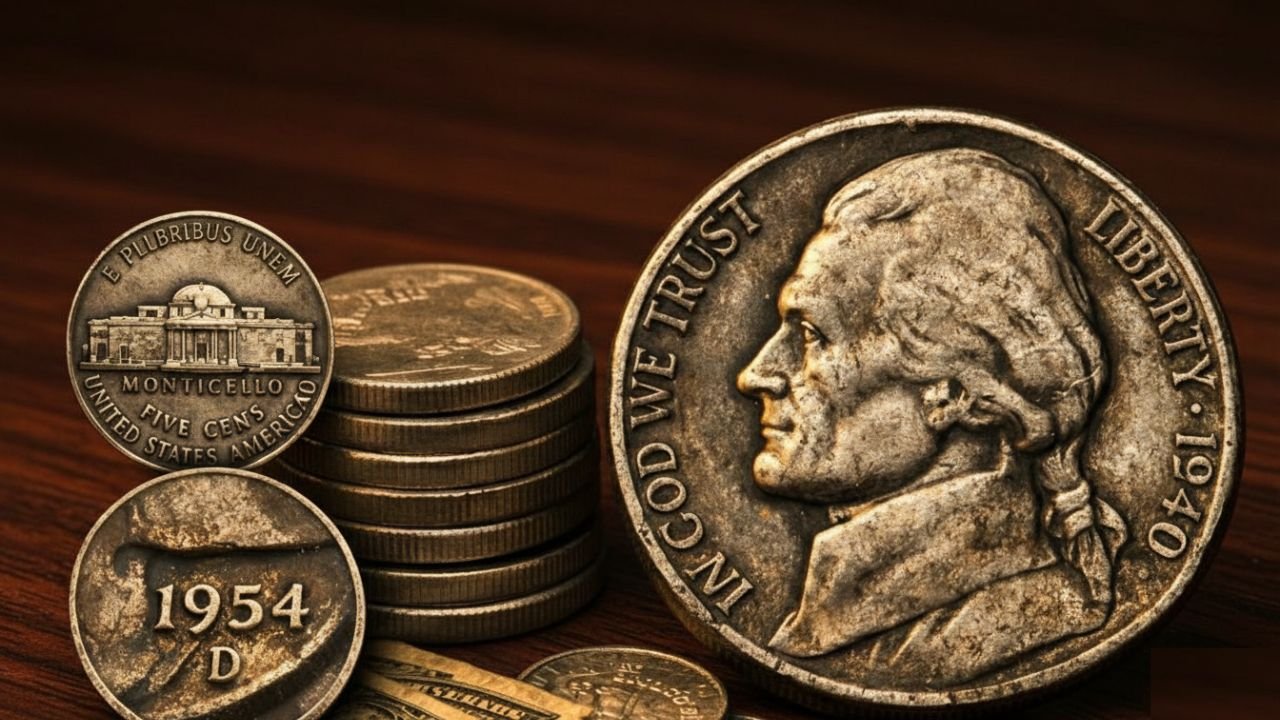
Jefferson Nickels: For many, the five-cent coin is merely a convenient piece of pocket change. However, for dedicated numismatists and casual observers alike, the Jefferson Nickel represents a fascinating chapter of American history, filled with subtle variations and rare minting anomalies that can turn a humble nickel into a prized possession. As we move through 2026, the hunt for these elusive treasures continues, reminding us that extraordinary value can often be found in the most ordinary places. The journey of the Jefferson Nickel began in 1938, replacing the Buffalo Nickel with a design by Felix Schlag that featured President Thomas Jefferson on the front and his Virginia estate, Monticello, on the back. While the vast majority of these coins hold only their face value, a select few stand out due to unique historical circumstances, minting errors, or exceptionally low production numbers. These are the stories that captivate collectors and drive the market.
A Legacy Cast in Silver and Steel
One of the most historically significant chapters in the nickel’s history occurred during World War II. From 1942 to 1945, nickel was a critical material for the war effort, so the U.S. Mint altered the coin’s composition to include silver, manganese, and copper. These “wartime nickels” are easily identifiable by the large mint mark placed prominently above the dome of Monticello on the reverse. The 1942 issues, being the first of this series, are particularly sought after, not only for their silver content but also as tangible artifacts of America’s home-front efforts during a global conflict. Finding one in pristine, uncirculated condition is a significant event for any collector.
The Hunt for Key Dates and Unique Errors
Beyond the wartime era, certain years have become legendary among collectors due to their scarcity. The 1950-D Jefferson Nickel, for instance, is a cornerstone of the series. With a mintage of just over 2.6 million coins from the Denver Mint, it stands as a key date that every serious collector hopes to acquire. Its value escalates dramatically in higher grades, making it a worthwhile investment for those who can find one in excellent condition. Equally fascinating are the coins that escaped the Mint with errors. The 1939 “Doubled Monticello” reverse is a classic example, where a slight misalignment during the die-making process created a visible doubling in the inscriptions “Monticello” and “Five Cents.” This striking error gives the coin a unique, ghost-like appearance and makes it a highly desirable piece. Similarly, experimental pieces, like the rumored 1964 Special Strike nickels, which exhibit sharper details and a unique satin finish, are the stuff of legend, with only a handful known to exist and values to match.
The Art of Discovery and Preservation
Identifying a potentially valuable nickel requires a keen eye. Collectors should look for unusual features like doubling in the lettering or design, missing mint marks, or an odd, glossy finish. A simple magnifying glass can be the most powerful tool in a collector’s arsenal. Once a promising coin is found, its condition is paramount. Professional grading services like the Numismatic Guaranty Company (NGC) or the Professional Coin Grading Service (PCGS) provide an official, trusted assessment of a coin’s state, which is crucial for establishing its true market value. A rare error coin preserved in mint-state condition can be worth exponentially more than the same coin that has been worn down through circulation. Ultimately, collecting Jefferson Nickels is a pursuit that blends history, art, and the thrill of the hunt. Each rare coin is more than just a piece of currency; it is a small, tangible link to a specific moment in time, waiting to be rediscovered and appreciated.
Key Jefferson Nickel Varieties and Their Appeal
| Variety/Date | Key Feature | Historical Context | Collector’s Appeal |
|---|---|---|---|
| 1939 Doubled Monticello | Visible doubling on “Monticello” and “Five Cents” | Early die-making error in the series | Dramatic error, highly prized in any condition |
| 1942 Wartime Silver Issue | Large mint mark above Monticello; silver composition | WWII metal conservation effort | Historical significance & precious metal content |
| 1950-D | Lowest mintage of the series (2.6 million) | Post-war demand for coinage | Key date, cornerstone for serious collections |
| 1964 Special Strike (Specimen) | Satin-like finish with sharper details | Experimental striking, very few exist | Extreme rarity, a legendary “Holy Grail” coin |
| 2004-D & 2005-D Westward Journey Errors | Doubled-die errors on modern reverse designs | Introduction of new, temporary designs | Modern coins with error potential, still accessible |
Frequently Asked Questions (FAQs)
1. What is the easiest way to check if my Jefferson Nickel is valuable?
Start by looking at the date and mint mark. Key dates like 1950-D are well-known. Then, use a magnifying glass to inspect the lettering and design elements closely. Look for any unusual doubling, especially on the words “Monticello” and “Five Cents” on the back of older coins. For nickels dated 1942-1945, check for a large mint mark (P, D, or S) above the building; these contain silver.
2. What does “PCGS” or “NGC” mean, and why is it important?
PCGS (Professional Coin Grading Service) and NGC (Numismatic Guaranty Company) are two of the most respected third-party coin grading services. When you send them a coin, experts authenticate it, grade its condition on a standardized scale, and encapsulate it in a protective holder. This process gives buyers and sellers confidence in the coin’s authenticity and quality, which is essential for realizing its full market value.
3. Are all “wartime” nickels from 1942-1945 worth a lot of money?
While they all contain 35% silver, their value varies based on condition. A common wartime nickel in worn condition is worth its silver melt value (which fluctuates) plus a small premium. However, a 1942 wartime nickel in pristine, uncirculated condition is a different story and can be quite valuable to collectors.
4. Can I still find rare Jefferson Nickels in my pocket change today?
It’s possible, though increasingly rare. Modern error coins from the 2000s, like some from the Westward Journey series, are the most likely candidates to be found in circulation. Finding a key date like a 1950-D in your change is extremely unlikely, as collectors have been pulling them from circulation for decades.
5. What is the first thing I should do if I think I’ve found a rare nickel?
First, do not clean it! Cleaning a coin drastically reduces its value. Store it carefully in a soft holder or envelope. Then, try to identify it using a reputable coin guide or website. If it appears to be a known rarity, you may consider contacting a local coin dealer or submitting it to a professional grading service for authentication.