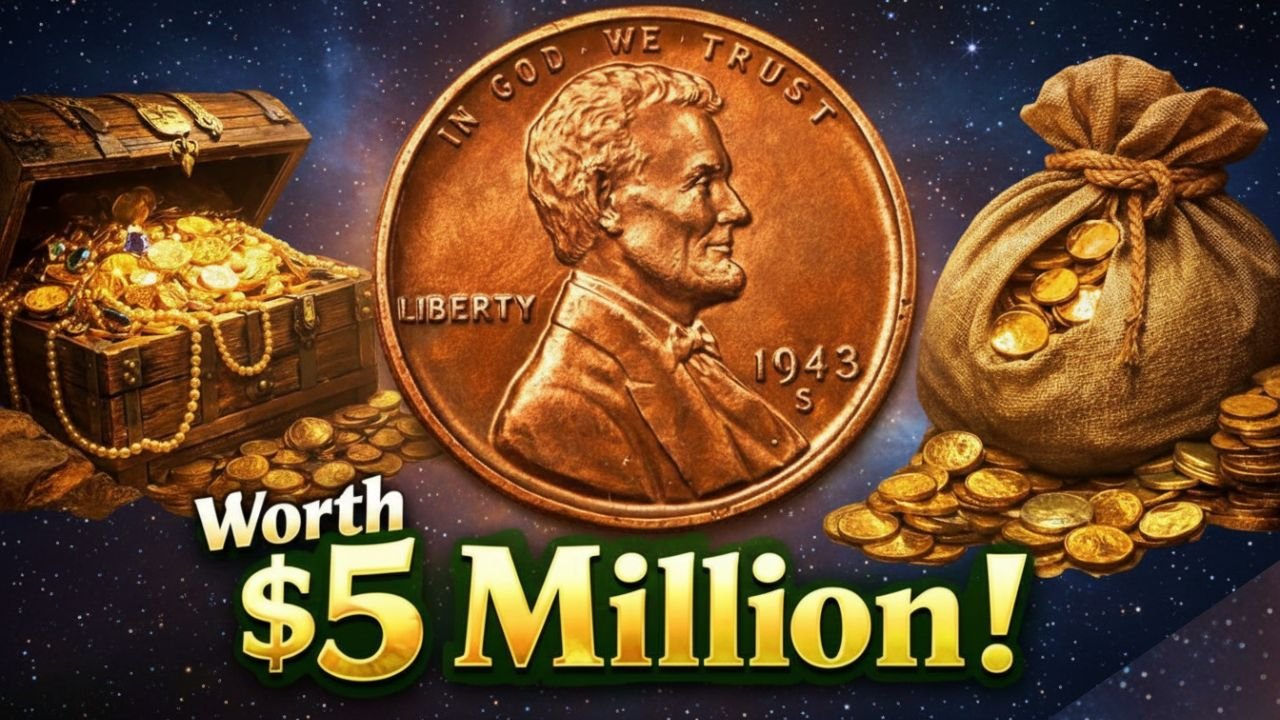
Rare 1943 Copper Penny: The year 1943 marked a turning point in American coinage history. As global conflict demanded unprecedented industrial output, the United States Mint faced a critical resource challenge. Copper, essential for producing penny planchets, had become a strategically vital material for wartime manufacturing. This national priority led to one of the most significant temporary changes in American currency—and inadvertently created a numismatic treasure that would captivate collectors for generations.
The Wartime Transition That Created a Rarity
When the United States entered World War II, military production consumed vast quantities of copper for ammunition casings, communication wire, and naval vessels. The Treasury Department, coordinating with wartime production boards, authorized the Mint to temporarily abandon the traditional bronze composition for one-cent pieces. Beginning in 1943, pennies would be struck on zinc-coated steel planchets, producing coins with a distinctive silvery appearance that differed markedly from the familiar reddish-brown cents Americans had carried for decades. The transition was remarkably swift. Mint facilities in Philadelphia, Denver, and San Francisco retooled their operations to accommodate the new steel planchets. Yet in this rapid conversion, a small number of bronze planchets from 1942 remained in bins, hoppers, or press feeders. When workers resumed production, these few leftover planchets fed into the coining presses alongside their steel counterparts, receiving the 1943 dies and emerging as accidental hybrids—coins bearing the date of wartime steel cents but composed of pre-war bronze.These surviving anomalies represent not deception or intentional variation, but simple human oversight during an era of extraordinary national effort. Each known example carries with it the story of workers operating at capacity, focused on supporting troops overseas rather than meticulously purging every last copper blank from industrial equipment.
Summary Information Table
| Category | Details |
|---|---|
| Official Name | Lincoln Cent, Bronze Composition |
| Date | 1943 |
| Mint Facilities | Philadelphia (no mintmark), Denver (D), San Francisco (S) |
| Standard Composition | Zinc-coated steel (99% steel, 1% zinc) |
| Error Composition | Bronze (95% copper, 5% tin and zinc) |
| Standard Weight | 2.70 grams |
| Error Weight | 3.11 grams |
| Standard Appearance | Silvery gray, magnetic |
| Error Appearance | Warm reddish-brown, non-magnetic |
| Estimated Survivors | 15-20 across all facilities |
| Authentication Methods | Date style verification, magnet test, weight measurement, metallurgical analysis, die variety attribution |
| Professional Services | PCGS, NGC, ANACS |
| Market Status | Institutional-level rarity; transactions typically private treaty or major auctions |
| Significant Sales Range | Multiple specimens exceeded $1,000,000; record transaction exceeds $5,000,000 |
| Primary Collecting Motives | Mint error significance, wartime history, series completion, investment quality |
Notable Transactions and Market Recognition
The collecting community has documented several significant sales that illustrate this coin’s standing among American rarities. One particularly well-preserved specimen, formerly part of a renowned Texas collection, achieved a remarkable price through private treaty negotiations between sophisticated collectors. Another example, discovered by a teenager in his school lunch money during the 1940s and held by his family for decades, entered the market to international bidding competition. These transactions reflect more than simple supply and demand. They represent the convergence of multiple collecting motivations—the pursuit of mint errors, the fascination with wartime history, and the desire to own a coin recognized as singular within its series. Bidders competing for these pieces include not only Lincoln cent specialists but also collectors of American rarities generally, institutions seeking exhibition-quality specimens, and investors diversifying into tangible assets with strong provenance. Auction houses have developed considerable expertise in presenting these coins, emphasizing their historical context alongside their numismatic significance. Catalog descriptions typically trace the lineage of ownership, known as provenance, which adds authenticity and narrative depth to each offering. Coins with documented chains of ownership reaching back to their original discovery command particular attention.
Methods for Authentic Identification
The substantial value commanded by genuine specimens has unfortunately inspired numerous counterfeit and altered pieces. Responsible collectors approach any purported 1943 bronze cent with appropriate skepticism and follow established verification protocols. Date examination represents the logical starting point. Genuine pieces display the 1943 date digits in the style and position characteristic of wartime production. Alterations frequently involve modifying 1945 or 1948 cents, requiring scrutiny of digit shapes and spacing. Metallic composition provides the most accessible initial test. Authentic examples exhibit the warm bronze coloration of pre-war cents, distinctly different from the cool gray of steel or the orange hue of modern copper-plated zinc. However, visual assessment alone cannot conclusively authenticate a piece, as skillful counterfeiters can apply surface treatments to mimic bronze appearance.
Mint Errors as Historical Documents
Coin collectors have long recognized that mint errors offer unique windows into manufacturing processes. Unlike regular production coins struck within specification tolerances, error pieces capture specific moments when mechanical systems, material supplies, or human attention deviated from standard procedures.The 1943 bronze cent ranks among the most significant mint errors in American numismatics for several reasons. Its connection to wartime production gives it historical resonance beyond its mechanical origin. The dramatic visual difference between the intended steel composition and the actual bronze planchet makes the error immediately apparent even to casual observers. And the extreme scarcity ensures that each example carries substantial documentary importance.Other notable mint errors from this period include off-metal strikes using leftover planchets from different denominations, double strikes where coins received multiple impressions, and clipped planchets where blanks were cut improperly. These pieces, while generally less valuable than the 1943 bronze cent, share the same essential character—they are artifacts of human industry operating under pressure, preserving moments that standard production deliberately erased.
Frequently Asked Questions
How can I tell if my 1943 penny is valuable?
Begin with a magnet. If your coin sticks to the magnet, it is the common steel variety and not the bronze error. If it does not stick, examine the date carefully to ensure it reads 1943 and not an altered 1945 or 1948. Weigh the coin if possible—bronze specimens weigh approximately 3.11 grams versus 2.70 grams for steel. Finally, submit any promising candidate to a professional grading service for authoritative determination.
How many 1943 bronze pennies are known to exist?
Numismatic researchers have authenticated approximately fifteen to twenty specimens across all mint facilities. Philadelphia issues represent the majority of confirmed pieces. Denver and San Francisco examples each number between one and three known specimens. New discoveries occasionally emerge but remain extraordinarily rare events.
Why were some 1943 pennies made of copper?
The bronze planchets were remnants from 1942 production that remained in mint equipment when 1943 production began. Despite procedural efforts to clear previous materials, a small number of these planchets fed into the coining presses and received the 1943 dies. The error resulted from the speed of wartime conversion rather than intentional production.
What is the most a 1943 copper penny has sold for?
Several specimens have realized seven-figure prices in private and public transactions. One particularly well-preserved example with exceptional provenance reportedly changed hands for more than five million dollars. Market values reflect condition, mintmark rarity, and completeness of documented ownership history.
Are there other valuable 1943 pennies?
The standard steel cents from 1943 remain common and generally hold nominal value in circulated condition, though uncirculated examples command modest premiums. Some collectors seek steel cents from specific mint facilities or in high grades. Additionally, a small number of 1943 bronze cents exist on experimental planchets or with other distinctive characteristics.
Why don’t all 1943 error pennies have the same value?
Value varies significantly based on mint of origin, condition grade, visual appeal, and completeness of provenance. Denver and San Francisco specimens are substantially rarer than Philadelphia issues. Coins in higher states of preservation command proportionally greater values. Pieces with documented ownership chains reaching to original discovery attract competitive bidding from sophisticated collectors.
Are there similar errors from other years?
Yes, off-metal striking errors have occurred throughout modern minting history, though none have achieved the same prominence as the 1943 bronze cent. Examples include 1944 steel cents (the reverse error, when bronze planchets returned but some steel blanks remained), coins struck on planchets intended for other denominations, and transitional issues during composition changes.