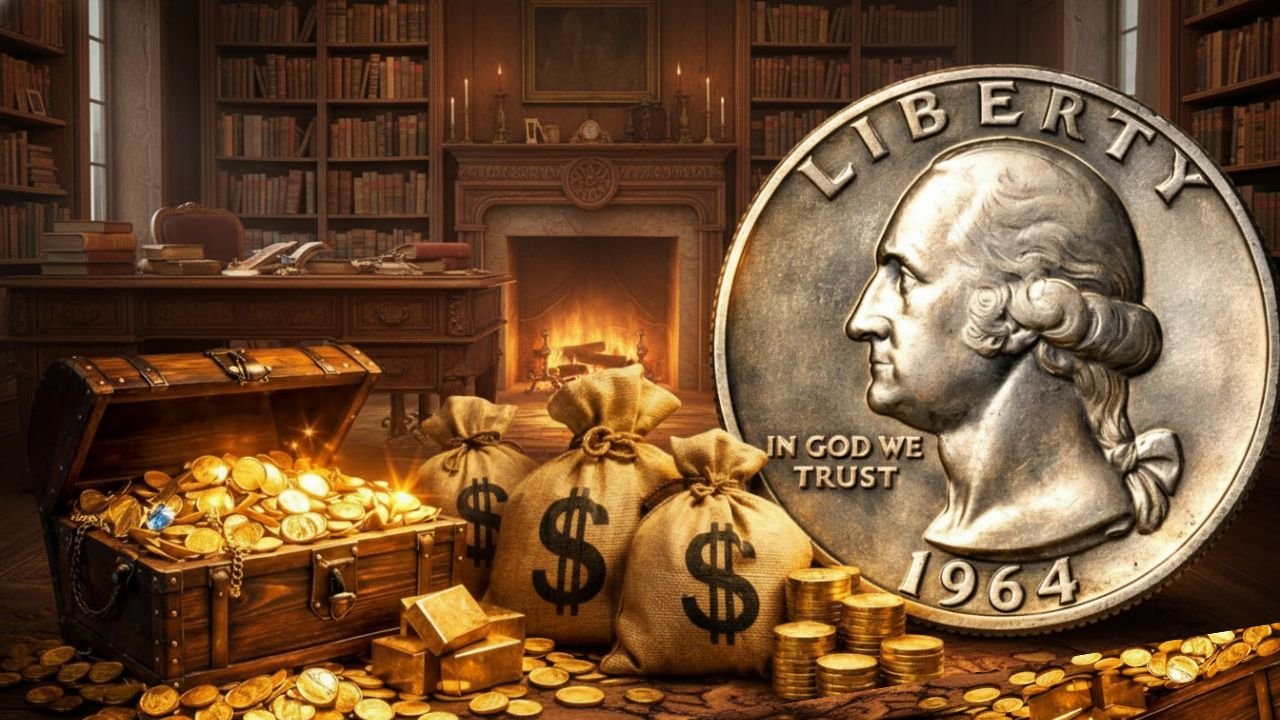
Washington Quarter 2026: There’s something quietly remarkable about the coins that pass through our hands every day. The Washington Quarter, first minted in 1932, has traveled through nearly a century of American life—through Depression-era lunch counters, wartime ration books, vending machines of the 1960s, and now the digital payment age. It remains one of the most collected coins in the world, not because it’s rare in the traditional sense, but because it represents something more personal: the possibility that history might be sitting right there in your pocket change. This guide takes a fresh look at Washington Quarters in 2026, moving beyond sensational claims to provide practical, accurate information for collectors at every level.
Understanding the Washington Quarter’s Journey
The story of the Washington Quarter begins during the Great Depression, when Congress decided not to issue a commemorative coin for George Washington’s 200th birthday, but rather to replace the Standing Liberty Quarter with a permanent tribute. Sculptor John Flanagan’s design won a quiet competition—his initials “JF” appear discreetly at the base of Washington’s bust—and the coin entered circulation in August 1932. What many collectors don’t realize is that the original 1932 Philadelphia issues were struck in limited quantities because the Mint had already produced enough quarters for the year. This accident of timing, not intentional scarcity, created the foundation for modern quarter collecting. The 1932-D and 1932-S followed, each with mintages under 500,000—tiny numbers compared to later years. When you hold a Washington Quarter, you’re holding a small piece of American manufacturing history. The composition changed from 90% silver to copper-nickel clad in 1965, not as a cost-cutting measure alone, but because silver prices had risen so high that quarters were literally becoming worth more melted than spent. This transition created two distinct eras of Washington Quarters, each with its own collecting appeal.
Current Market Values What Washington Quarters Actually Trade For
The following table reflects realistic retail prices in early 2026, based on recent auction results and dealer inventories. These are buying prices; selling a coin to a dealer typically brings 50-70% of these figures unless the coin is particularly desirable.
| Date/Variety | Good-4 | Very Fine-20 | MS-63 | MS-65 | Notes |
|---|---|---|---|---|---|
| 1932-D | $85 | $225 | $2,800 | $8,500 | Key date, scarce in all grades |
| 1932-S | $75 | $200 | $2,400 | $7,200 | Similarly scarce |
| 1934 Philadelphia | $6 | $15 | $55 | $225 | Common but elusive in high grade |
| 1937-S | $7 | $18 | $70 | $300 | Well-struck examples prized |
| 1942-D | $5 | $12 | $45 | $175 | Repunched mint mark varieties exist |
| 1950-D | $5 | $10 | $30 | $100 | Common date, condition matters |
| 1962-D | $5 | $8 | $20 | $65 | Silver, affordable in most grades |
| 1965 | Face | $2 | $8 | $25 | No mint mark, clad |
| 1976 Bicentennial (clad) | Face | Face | $3 | $12 | Billions minted |
| 1976-S Silver | — | — | $8 | $15 | Only in mint sets |
| 1982-P | Face | Face | $4 | $18 | Common, tough in MS67+ |
| 1995-P | Face | Face | $3 | $12 | Common |
| Off-center error (10-20%) | — | — | $75-150 | — | Value depends on visibility |
| Double strike error | — | — | $300-1,200 | — | Wide range based on severity |
The Silver Era 1932-1964
Silver Washington Quarters carry a warmth that clad coins lack. The 90% silver alloy gives them a distinctive ring when dropped and a subtle luster that develops into soft toning over decades. Collectors often describe these coins as having “presence”—they feel substantial in the hand. The key dates remain the 1932-D and 1932-S, but knowledgeable collectors also watch for condition rarities from the 1930s. A 1934 Philadelphia quarter with sharp details and original surfaces can be surprisingly scarce. The war years produced interesting varieties too, including 1942-D quarters with repunched mint marks that careful observers can spot under magnification. Silver Washington Quarters in circulated grades typically trade based on silver content plus a modest premium. As of early 2026, silver prices have stabilized between $24 and $26 per troy ounce, placing the melt value of a pre-1965 quarter at approximately $4.50 to $5.00. Coins in Very Fine condition or better command additional premiums, particularly for dates like 1937, 1938, and 1939-S.
The Clad Era 1965 to Present
When copper-nickel clad quarters first appeared, many Americans viewed them as temporary wartime measures. Instead, they became permanent. Early clad Washington Quarters from 1965 through 1967 carry no mint marks—a deliberate decision to discourage hoarding—which makes them interesting historical artifacts of the Johnson administration’s coinage policies.The modern Washington Quarter has undergone several redesigns, but the original Flanagan obverse portrait continued uninterrupted until 1999. Those three decades of clad quarters, from 1965 through 1998, represent the most accessible area for new collectors. Complete sets can be assembled at reasonable cost, and the challenge lies in finding well-struck, high-grade examples from circulation.
The 1976 Bicentennial Quarters Separating Fact from Common Misconceptions
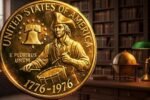
Bicentennial quarters deserve special attention because they generate more confusion than almost any other modern coin. Minted in 1975 and 1976 with the dual date 1776-1976, these quarters feature Jack Ahr’s colonial drummer design on the reverse. Contrary to popular belief, Bicentennial quarters are not rare. The Philadelphia and Denver mints produced over 1.6 billion of them for circulation. However, silver-clad Bicentennial quarters were struck for collectors and sold in mint sets and proof sets. These contain 40% silver and weigh slightly more than their clad counterparts. A silver-clad Bicentennial quarter in its original government packaging is worth $7 to $12 today; in circulation, they are seldom found because they were never released into general commerce. The truly scarce Bicentennial variety is the 1976-S proof with no mintmark, a small number of which escaped the San Francisco Mint without their “S” designation. Fewer than twenty authentic examples are known, making this one of the great modern rarities.
Professional Grading Why It Matters More Than You Think
Coin grading can feel intimidating to newer collectors, but it’s essentially about three things: wear, marks, and eye appeal. A coin that shows friction on Washington’s cheek or the eagle’s breast is circulated, regardless of how shiny it appears. A coin with no wear but numerous contact marks isn’t truly Mint State. A coin with beautiful original toning often commands higher prices than one that’s been aggressively dipped to look unnaturally bright.Professional grading services like PCGS and NGC provide consistency. When a coin is encapsulated in a sealed holder with a numerical grade, it can be bought and sold with confidence. This matters most for coins valued over $300, where the cost of certification becomes proportionally reasonable.For Washington Quarters, the difference between MS63 and MS65 can mean thousands of dollars on key dates. On common dates, the same two-point spread might represent $20. Understanding these distinctions helps collectors allocate their resources wisely.
Where Collectors Find Washington Quarters
Circulation searching remains the most democratic way to acquire Washington Quarters. Banks that still use coin counters often have rolls available for customers. Some collectors establish relationships with local retailers who save interesting coins. The thrill of finding a silver quarter in a roll of laundry quarters never diminishes. Coin shows offer concentrated opportunities. Unlike online marketplaces, shows allow collectors to examine coins in person before purchasing. Lighting conditions vary, but holding a coin in hand reveals information that photographs cannot convey. Reputable online dealers provide convenience and return privileges. Established firms like APMEX, David Lawrence, and GreatCollections maintain extensive Washington Quarter inventories. eBay requires more caution but remains a viable source when buyers verify seller feedback and carefully study photographs. Estate sales occasionally yield overlooked treasures. Families liquidating a relative’s collection may not recognize the value of key dates or errors. These situations require sensitivity—the goal is fair acquisition, not exploitation—but they represent legitimate opportunities for knowledgeable collectors.
Frequently Asked Questions About Washington Quarters
How can I tell if my Washington Quarter is silver?
Check the edge. Silver quarters show a solid silver-colored edge. Clad quarters reveal a brown stripe of copper between two nickel layers. Also, silver quarters weigh 6.25 grams versus 5.67 grams for clad, though this requires a precise scale. Dates before 1965 are silver unless they’re proof strikes from later years.
Are Bicentennial quarters worth keeping?
Yes, as mementos of American history. The circulating clad versions are common but still represent an interesting era of coinage. Silver Bicentennial quarters have modest collector value. No Bicentennial quarter is worth thousands of dollars despite occasional internet rumors to the contrary.
What’s the most valuable Washington Quarter?
The finest known 1932-D in MS68 grade sold for $143,750 in 2008. Among error coins, a 1970-D quarter struck on a Canadian nickel planchet brought $35,000. These are exceptional rarities that most collectors will never encounter.
Should I clean my old quarters?
No. Cleaning removes the original surface and dramatically reduces value. Even gentle cleaning with baking soda or jewelry cloth leaves microscopic scratches that collectors detect immediately. If a coin is truly dirty, professional conservation services exist, but they’re rarely necessary for Washington Quarters.
How do I find a reputable coin dealer?
Look for dealers who are members of the American Numismatic Association and subscribe to its code of ethics. Ask about their return policy before purchasing. Reputable dealers answer questions clearly and don’t pressure customers. Local coin shops with long track records often provide the best experience for newer collectors.
What does “proof” mean on a Washington Quarter?
Proof coins are struck specially for collectors using polished dies and planchets. They have mirror-like fields and frosted devices. Proof Washington Quarters are sold by the Mint in sets and were never intended for circulation. They typically carry higher values than business strikes of the same date.
Is coin collecting a good investment?
Some coins appreciate significantly, but collecting should be motivated primarily by enjoyment. The Washington Quarter market has shown steady, moderate growth over decades, with rare dates and high-grade examples performing best. Common dates in circulated grades generally keep pace with inflation but no more. Collect what you love, and appreciation becomes a pleasant bonus rather than an expectation.