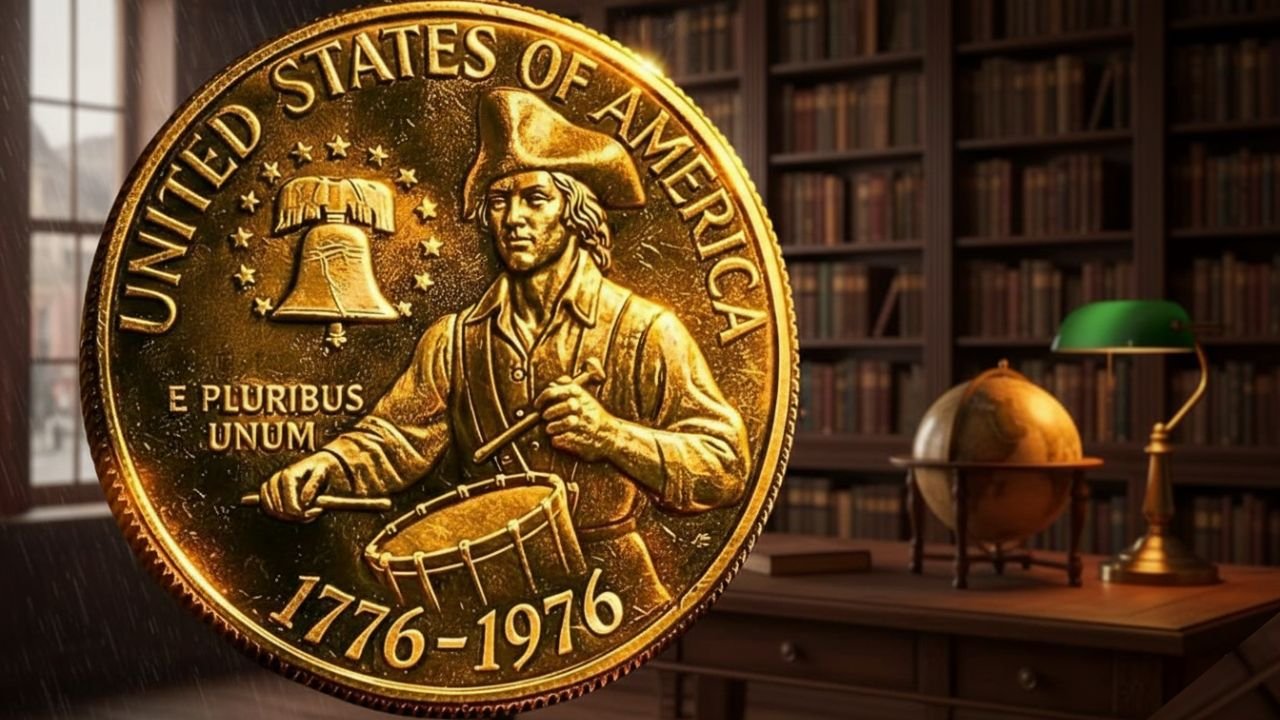
Rare 1776–1976 Bicentennial Quarter: The 1776-1976 Bicentennial Quarter is more than just pocket change; it’s a tangible piece of American heritage. Minted to commemorate the 200th anniversary of the United States Declaration of Independence, this coin sparked a nationwide celebration and remains a popular collectible today. While millions were produced, understanding its history, varieties, and distinguishing features can reveal why some of these quarters are considered hidden treasures by numismatists.
Historical Significance and Design
In the mid-1970s, the United States Mint embarked on a special coinage program to honor the nation’s bicentennial. For the quarter dollar, the familiar portrait of George Washington by John Flanagan was kept on the obverse (heads) side, but it was paired with the dual date “1776-1976.” The real transformation was on the reverse (tails) side, where a new design by Jack L. Ahr was featured. This design depicts a colonial drummer boy, with a torch of victory and a ring of thirteen stars, symbolizing the original colonies. This patriotic imagery captured the spirit of the anniversary and made the coin an instant keepsake for Americans. These quarters entered circulation in 1975 and continued through 1976, replacing the standard Washington quarter for those years. They were struck in two primary compositions: the regular copper-nickel clad version for general circulation and a 40% silver version specially produced for collectors in proof and uncirculated sets.
Bicentennial Quarter Information Table
| Feature | Detail |
|---|---|
| Years of Issue | 1975-1976 (all bear the dual date 1776-1976) |
| Obverse Design | George Washington portrait |
| Reverse Design | Colonial Drummer Boy by Jack L. Ahr |
| Standard Composition | Copper-nickel clad (75% Copper, 25% Nickel) |
| Special Composition | 40% Silver (outer layers of 80% silver, 20% copper bonded to a core of 21% silver, 79% copper) |
| Mint Marks | Philadelphia (none), Denver (D), San Francisco (S) |
| Face Value | $0.25 (Twenty-five Cents) |
| Where Found | Circulation (copper-nickel), Collector Sets (silver) |
What Makes a Bicentennial Quarter Valuable?
The vast majority of Bicentennial Quarters you’ll find in everyday change are worth their face value of 25 cents. However, value increases based on several key factors: composition, condition, mint mark, and the presence of errors. The 40% silver versions are inherently worth more due to their precious metal content. Coins in pristine, uncirculated, or proof condition are always more desirable to collectors. Furthermore, while the coins were struck at the Philadelphia (no mint mark), Denver (“D” mint mark), and San Francisco (“S” mint mark) mints, the “S” mint coins are almost exclusively the 40% silver proofs or uncirculated versions, making them more valuable. The most significant premiums are attached to minting errors. Examples include doubled dies (where elements of the design appear doubled), off-center strikes, or coins struck on the wrong planchet (like a quarter blank struck on a dime planchet). These unique errors can turn a common coin into a rarity worth hundreds or even thousands of dollars.
How to Identify and Appreciate Your Coin
Checking your coins is a simple process. First, look for the dual date and the drummer boy design. Next, check for a mint mark near Washington’s ponytail. Finally, assess its condition—is it worn from circulation, or is it sharp and lustrous? For the silver versions, the edge of the coin will be a solid silver color, unlike the distinctive copper-brown stripe on the edge of a regular clad quarter. Beyond potential monetary value, the Bicentennial Quarter serves as a reminder of a pivotal national celebration. It represents a moment when history was reflected in everyday objects, allowing anyone to hold a piece of the bicentennial fervor. Collecting these coins, whether for their historical narrative or the thrill of the hunt, connects us to America’s story in a uniquely personal way.
Frequently Asked Questions (FAQ)
1. Is every 1776-1976 quarter worth a lot of money?
No. The overwhelming majority of Bicentennial Quarters in circulation are the copper-nickel clad version and are worth exactly 25 cents. Value escalates with silver content, exceptional condition, or rare minting errors.
2. How can I tell if my Bicentennial Quarter is silver?
Examine the coin’s edge. A 40% silver Bicentennial Quarter will have a solid silver-colored edge with no visible copper stripe. The coin may also have a different, slightly heavier feel and a deeper, grayish tone compared to the standard white-metallic look of the clad version.
3. What is the most valuable type of Bicentennial Quarter?
The most valuable examples are typically error coins, such as those with significant doubling or striking mistakes. After errors, high-grade examples (MS-67 or higher) of the 40% silver proofs from the San Francisco Mint command the highest prices among standard issues.
4. Where were Bicentennial Quarters minted?
They were produced at three U.S. Mints: Philadelphia (no mint mark), Denver (“D” mint mark), and San Francisco (“S” mint mark). The “S” mint coins were primarily for collector sets and are often, but not exclusively, 40% silver.
5. Should I get my coin professionally graded?
Professional grading is generally recommended only if you believe your coin is a rare error or is in exceptionally fine mint state condition. For a common circulated Bicentennial Quarter, the cost of grading would far exceed the coin’s value.