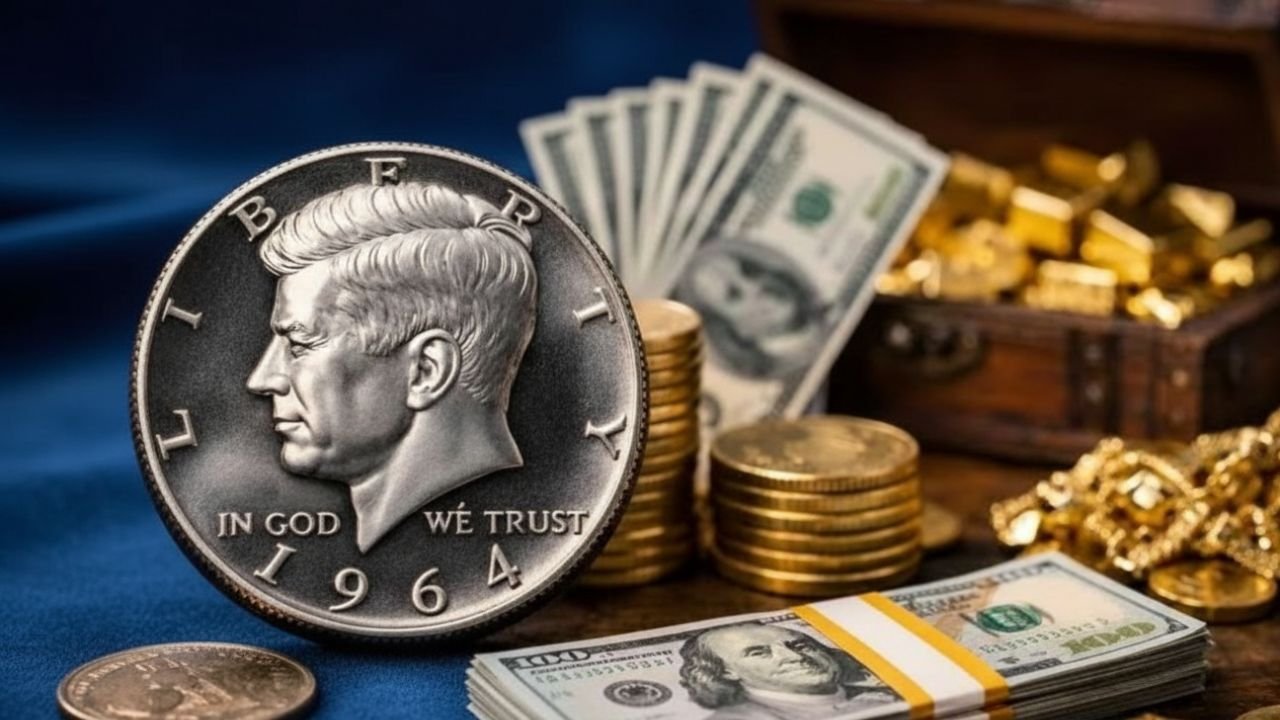
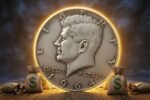
Hidden Treasure Alert: The Kennedy Half Dollar stands as one of the most poignant and collected coins in American numismatic history. First minted in 1964 as a heartfelt tribute to the assassinated President John F. Kennedy, it quickly evolved from circulating currency into a cherished piece of Americana. While many of these coins are common, certain rare editions have captured the imagination of collectors worldwide, sometimes reaching remarkable values at auction. This article explores the fascinating history, key varieties, and collecting essentials for this iconic series.
A Historical Tribute in Silver and Clad
The creation of the Kennedy Half Dollar was an act of national mourning and remembrance. Approved by Congress just over a month after President Kennedy’s death, the coin replaced the Benjamin Franklin half dollar with unprecedented speed. The obverse, featuring a portrait of Kennedy sculpted by Gilroy Roberts, and the reverse, depicting the Presidential Seal by Frank Gasparro, were met with immediate public embrace. The early 1964 coins, struck in 90% silver, resonate deeply with the era’s history. Subsequent changes in composition—to silver-clad and later copper-nickel—reflect the economic shifts of the late 20th century, making the series a timeline of both metallurgy and memory.
What Makes a Kennedy Half Dollar Valuable?
A coin’s market value is determined by a confluence of factors, each adding a layer of desirability.
- Rarity: This refers to the original mintage numbers and how many specimens survive today in collectible condition. Some issues were minted only for special sets.
- Condition (Grade): A coin’s state of preservation is paramount. A pristine, uncirculated coin can be worth hundreds or thousands of times more than a worn one.
- Mintmark: The letter indicating the mint of origin (“D” for Denver, “S” for San Francisco, no mintmark for Philadelphia) can significantly affect rarity.
- Varieties and Errors: Distinct design modifications or striking mistakes during the minting process can create sought-after collectibles.
- Metallic Composition: The 1964 (90% silver) and 1965-1970 (40% silver) issues possess intrinsic precious metal value alongside their numismatic worth.
Notable and Valuable Varieties
While thousands of coins are searched daily, a few specific editions consistently stand out for their rarity and historical interest.
The 1964 Accented Hair Proof
Among the first proof strikes produced, this variety features more deeply defined strands in Kennedy’s hair. The design was quickly modified, making the “Accented Hair” version scarce. It is a cornerstone for serious collectors, with gem-quality examples commanding substantial premiums due to its status as the initial commemorative design.
The 1970-D Kennedy Half Dollar
This issue was not released for general circulation. All 1970-D halves were minted exclusively for inclusion in that year’s Special Mint Sets sold to collectors. Its relative scarcity, especially in high grades, makes it a key date for completing a collection of business-strike coins from the Denver Mint.
Special Mint Set (SMS) Coins
In 1965, 1966, and 1967, the U.S. Mint produced Special Mint Sets as an alternative to proof sets. These coins feature a unique finish that is distinct from both regular circulation strikes and proof coins. Examples with exceptional cameo contrast and surfaces are particularly prized by specialists.
Notable Mint Errors
As with any coin series, dramatic minting errors can create unique and valuable specimens. These may include doubled dies (where design details appear doubled), off-center strikes, or coins struck on incorrect planchets. The value of error coins depends heavily on the visibility and nature of the mistake.
Kennedy Half Dollar Reference Table
| Year | Mintmarks | Composition | Key Notes & Rarity Factors |
|---|---|---|---|
| 1964 | P, D | 90% Silver, 10% Copper | Only year of 90% silver circulation strikes. “Accented Hair” proof variety is key. |
| 1965-1970 | P, D, S | 40% Silver Outer Layer, 80% Copper Core | Silver-clad composition. 1970-D only available in mint sets. S-mint proofs began in 1968. |
| 1971-Present | P, D, S | Copper-Nickel Clad | Standard circulating composition, except for special issues. NIFC (Not Intended for Circulation) years: 1987, 2002-2020 (P&D). |
| 1976 (Bicentennial) | P, D, S | Copper-Nickel Clad (Silver Proofs exist) | Features special dual date (1776-1976) and Independence Hall reverse. |
| 1998-Present (Silver Proofs) | S | 90% Silver | Modern proof issues for collectors, sold directly by the U.S. Mint. |
A Guide for New Collectors
Beginning a collection of Kennedy Half Dollars can be a rewarding journey into history. Start by examining coins from circulation or acquiring affordable examples from coin dealers or reputable online marketplaces. Focus on learning to identify mintmarks, understanding the difference between proof and circulation strikes, and recognizing the signs of wear that affect grade. Building a complete date and mintmark set is a popular and challenging goal. Always remember to handle coins carefully by their edges and store them in appropriate, non-PVC holders to preserve their condition.
Frequently Asked Questions (FAQ)
Q: Are all Kennedy Half Dollars silver?
A: No. Only the 1964 coins are 90% silver. Those dated 1965-1970 are 40% silver. All circulating Kennedy halves from 1971 onward are made of copper-nickel clad, except for special modern silver proofs sold by the Mint.
Q: Where is the mintmark located on a Kennedy Half Dollar?
A: On coins dated 1964 to 1967, the mintmark is on the reverse, left of the eagle’s claw. From 1968 to the present, it is located on the obverse, just below Kennedy’s neck.
Q: What does “NIFC” mean?
A: It stands for “Not Intended for Circulation.” These coins (like most P and D mint halves from 2002-2020) were struck only for annual mint sets and sold directly to collectors, making them scarcer in the wild.
Q: How should I clean a dirty Kennedy Half Dollar?
A: Do not clean collectible coins. Even gentle cleaning can cause micro-scratches and permanently diminish a coin’s surface quality and value. For coins of potential worth, it is best to leave them as-is or consult a professional conservator.
Q: What is the best way to determine a coin’s value?
A: For coins you believe may be valuable, consult the Official ANA Grading Standards and price guides like the Red Book. For authentication and precise grading, consider submitting key coins to professional services like PCGS or NGC. Their encapsulated grades are the market standard.
The Lasting Appeal of the Series
The Kennedy Half Dollar endures as more than just currency; it is a miniature monument. For collectors, the pursuit is a blend of historical connection, the thrill of the hunt, and the appreciation of craft. Whether one is drawn to the heft of a silver 1964 issue, the pristine beauty of a proof, or the challenge of finding a scarce NIFC date, this series offers a rich and accessible field for exploration. The true value lies not only in potential financial gain but in the act of preserving a tangible piece of a national story, ensuring that each coin continues to be a teacher and a treasure for generations to come.