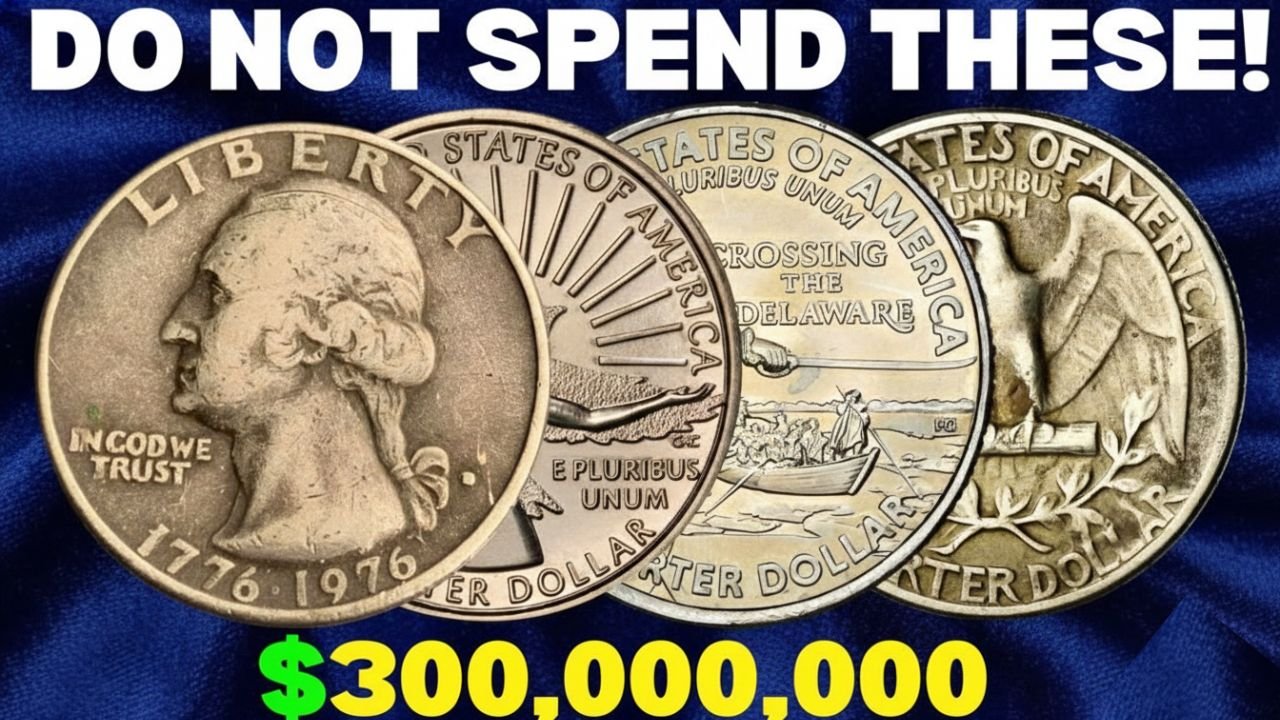
5 Rare Dimes and Bicentennial: Coins are far more than mere currency for transactions. They are tangible pieces of art and history, minted with the symbols and ideals of their time. For collectors and casual observers alike, each coin tells a story. Among the most captivating narratives in numismatics are those surrounding rare dimes and the distinctive Bicentennial quarters. While tales of extraordinary valuations often circulate, they speak to a deeper truth: a careful look at your change can connect you to a rich heritage and, sometimes, to a remarkable find.
The Dime A Century of American Design
The ten-cent piece holds a special place in American coinage, with a history stretching back to the late 18th century. Its evolution mirrors the nation’s own journey. Early designs like the Draped Bust (1796-1807) featured allegorical liberty, while later series, such as the Mercury dime (1916-1945)—actually depicting Liberty in a winged cap—became icons of artistry. The transition to the Roosevelt dime in 1946 honored a president who led through profound national challenge. True rarities in this series, often due to incredibly low mintages or striking errors, are preserved by collectors as pinnacle achievements of the mint’s craft.
A Guide to Notable U.S. Coin Rarities
The following table outlines some historically significant and valuable coins, acknowledging that most specimens found in circulation will not be these specific key dates. Values are approximate and for top-graded examples; circulated coins are worth less.
| Coin Name (Year & Mint Mark) | Key Characteristics | Approximate Value (High Grade) | Why It’s Sought After |
|---|---|---|---|
| 1894-S Barber Dime | Only 24 known to exist. “S” mint mark for San Francisco. | $1.5 million + | Extreme rarity due to tiny original mintage. |
| 1916-D Mercury Dime | Low mintage from Denver Mint. “D” mint mark on reverse. | $2,500 + | Key date in the Mercury dime series, scarce in good condition. |
| 1976-S Bicentennial Quarter (Silver Proof) | 40% silver composition, “S” mint mark, mirror-like proof finish. | $10 – $15 (for proof sets) | Special commemorative issue for collectors, not for circulation. |
| 1932-D Washington Quarter | First year of issue, low mintage from Denver. | $10,000 + | Key date quarter, highly scarce in mint state. |
| 1942/1 Mercury Dime | Overdate error (“2” over “1”) visible under magnification. | $20,000 + | Dramatic mint error from a wartime mintage. |
| 1976 No-S Proof Bicentennial Quarter | Proof coin missing the “S” mint mark. | $3,000 + | Major mint error on a proof coin, extremely rare. |
The 1976 Bicentennial Quarter A Nation’s Celebration
To commemorate the 200th anniversary of American independence, the U.S. Mint released a special quarter in 1976. With its iconic reverse design featuring a colonial drummer and a victory torch encircled by thirteen stars, it instantly stood apart from the standard Washington quarter. Hundreds of millions were struck for circulation in copper-nickel clad, and special 40% silver versions were minted for collectors. While the vast majority of these quarters remain face-value items, specific proofs, silver issues, and dramatic minting errors hold significant interest for the collecting community, keeping the spirit of the Bicentennial search alive.
What Makes a Coin Truly Valuable?
The value of a coin is determined by a confluence of factors, not just age. Rarity, dictated by how many were originally minted and how many survive today, is paramount. Condition is equally critical; a coin in pristine, uncirculated state can be worth exponentially more than a worn one. Historical significance and aesthetic beauty also drive demand. Furthermore, a unique error—such as a double-struck impression or an off-center design—can transform a common coin into a singular treasure. The market, fueled by collector passion, ultimately decides the price, which can sometimes reach astonishing figures for the rarest examples.
The Collector’s Pursuit More Than Money
Numismatics, the study and collection of currency, is a pursuit fueled by passion as much as potential investment. Collectors are the custodians of history, preserving coins and the stories they carry for future generations. The hunt for a rare dime or a unique quarter variant is a journey of learning and patience. It encourages attention to detail and historical research. While discovering a coin of great value is a thrilling possibility, many find the greater reward is in the connection to the past and the camaraderie of the collecting community.
Frequently Asked Questions
Q: Is my 1976 Bicentennial quarter worth a lot of money?
A: The vast majority of circulating 1976 quarters are worth face value (25 cents). Those with potential higher value are the 40% silver versions (minted in San Francisco with an “S” mark, not for circulation) or rare error coins, like proofs missing the mint mark. Check for an “S” mint mark and a different “ring” sound (silver) to start.
Q: Where is the mint mark on a dime?
A: On Mercury (1916-1945) and Roosevelt dimes (1946-present), the mint mark is on the reverse (tails side). For Mercury dimes, it’s near the bottom next to the fasces. For Roosevelt dimes, it’s above the date on the reverse from 1968 onward.
Q: What should I do if I think I have a rare coin?
A: First, carefully compare your coin to verified images and descriptions from reputable sources like the American Numismatic Association (ANA). Handle it by the edges to preserve condition. For a potential valuation, consider getting it certified by a professional grading service like PCGS or NGC.
Q: Are coin collecting guides with high values misleading?
A: Often, the published high values refer to coins in perfect, uncirculated, or proof condition. A coin that has been in circulation for decades will have wear and thus be worth a fraction of that headline price. It’s important to assess both the rarity and the condition.
Q: Why is collecting coins meaningful beyond potential value?
A: Coins are primary historical artifacts. They offer insights into a nation’s politics, artistry, technology, and economy at the time they were made. Collecting preserves this tangible history and fosters a hands-on connection to the past.
The enduring fascination with rare coins reminds us that wonder can be found in everyday objects. It encourages a closer look, an appreciation for craftsmanship, and a recognition of the stories embedded in the metal we pass from hand to hand. Whether you discover a multimillion-dollar rarity or simply a well-preserved piece of history, the true reward lies in the act of looking, learning, and holding a piece of time in your hand.