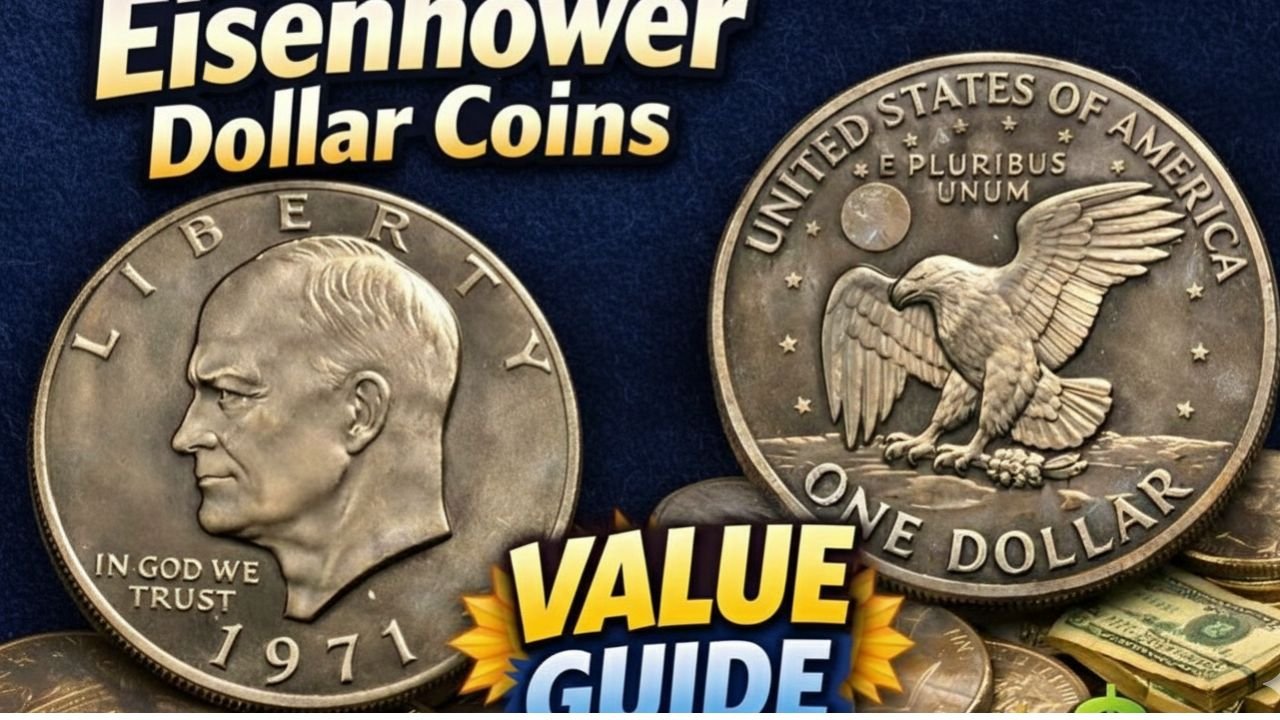
Eisenhower Dollar Coins: The Eisenhower dollar, minted from 1971 to 1978, stands as a bold and nostalgic piece of American currency. Struck to honor President Dwight D. Eisenhower and the monumental Apollo 11 moon landing, its large size made it unpopular for daily transactions but cemented its status as a beloved collectible. Beyond common circulation pieces, certain issues within this series have become numismatic legends, sought after for their rarity, historical context, and striking beauty. This guide explores the key varieties that captivate collectors, offering a fresh perspective on building a meaningful collection.
The Legacy and Design of a Commemorative Coin
The Eisenhower dollar was born from a desire to commemorate a beloved president and a national achievement of unparalleled scale. Its obverse features a profile of President Eisenhower designed by Chief Engraver Frank Gasparro. The reverse, depicting an eagle landing on the moon with an olive branch, symbolizes both peace and the success of the Apollo 11 mission. This fusion of presidential history and space exploration narrative gives the series a unique dual significance. While the circulating coins were copper-nickel clad, the Mint also produced special collectible versions in 40% silver, adding a tangible precious-metal appeal for investors and enthusiasts alike.
Eisenhower Dollar Reference Table
| Key Attribute | Details |
|---|---|
| Years of Mintage | 1971–1978 (Circulation), 1971–1974 & 1976 (40% Silver Proof/Uncirculated) |
| Composition | Copper-Nickel Clad (Circulation), 40% Silver (Collector Issues) |
| Designer | Frank Gasparro (Obverse & Standard Reverse) |
| Weight | 22.68 g (Clad), 24.59 g (40% Silver) |
| Diameter | 38.1 mm |
| Mint Marks | “D” (Denver), “S” (San Francisco), None (Philadelphia) |
| Key Varieties | 1972 Type 2 Reverse, 1976 Bicentennial (Drummer Boy Quarter design not on dollar) |
| Face Value | $1.00 USD |
The Distinct 1972 Type 2 Reverse Variety
Within the 1972 minting year, three distinct reverse designs were employed. The Type 2 variety, primarily struck at the Philadelphia Mint, is notable for its sharper, more detailed rendering of the eagle and the Earth below. The most identifiable difference is in the clearer, more pronounced island chain near Florida on the globe. This variety was produced in far fewer numbers than the standard Type 1, creating an instant rarity. For collectors, finding a 1972 Eisenhower dollar with this sharper reverse is a exciting discovery, with values rising significantly for coins in well-preserved, uncirculated condition.
The Pioneering 1971 Silver Proof Issue
As the inaugural year of the series, 1971 holds special importance. The San Francisco Mint struck exquisite proof versions specifically for collectors, with a composition of 40% silver. These coins feature deeply mirrored fields and frosted, cameo design elements, creating a stunning visual contrast. Their value is derived from their status as a first-year issue, their precious metal content, and their limited mintage as collectibles. Examples with exceptional, deep cameo contrast represent the pinnacle of quality for this issue and are highly prized in the numismatic community.
The Celebratory 1976 Bicentennial Silver Dollar
Marking the nation’s 200th anniversary, the 1976 bicentennial dollar features a special reverse design by Dennis R. Williams: the Liberty Bell superimposed against a moon, echoing the original theme. While copper-nickel versions were released into circulation, the 40% silver versions were included in special three-coin proof and uncirculated sets sold to collectors. This coin captures a moment of national celebration, combining patriotic symbolism with the era’s technological pride. Silver Bicentennial dollars, especially in high-grade proof condition, remain a cornerstone of modern U.S. commemorative collections.
Building a Thoughtful Collection
Starting an Eisenhower dollar collection can be a rewarding journey into 1970s Americana. Focus first on understanding the series’ structure: the clad circulation coins, the silver collector issues, and the key date varieties. Always prioritize a coin’s condition—well-struck, uncirculated, or proof examples with original surfaces retain the most value. Use reputable reference guides and grading services to authenticate and evaluate key pieces like the 1972 Type 2. Finally, consider the story: whether you’re drawn to the space-age symbolism, the presidential history, or the patriotic bicentennial celebration, collecting what resonates with you personally ensures the hobby remains fulfilling.
Frequently Asked Questions (FAQ)
Q: What makes the 1972 Type 2 Eisenhower dollar so special?
A: It is distinguished by a reverse design with sharper details, particularly in the Earth’s landmasses. Its rarity stems from a very limited production run at the Philadelphia Mint compared to the standard Type 1 reverse.
Q: Are all Eisenhower dollars made of silver?
A: No. Only those struck for collectors at the San Francisco Mint (with an “S” mintmark) from 1971-1974 and in 1976 contain 40% silver. The vast majority of coins found in circulation are copper-nickel clad.
Q: How can I tell if my Eisenhower dollar is a silver version?
A: Check the edge of the coin. A silver-clad coin will have a distinct, solid silver stripe with no copper band visible. Clad coins show a prominent copper-colored band. The weight and mintmark (“S”) are also key indicators.
Q: Is the 1976 Bicentennial Eisenhower dollar rare?
A: The copper-nickel circulation strikes are very common. However, the 40% silver versions, sold in special Mint sets, were produced in limited quantities and hold higher collector value, especially in proof condition.
Q: Where is the best place to buy these coins?
A: Reputable sources include established coin dealers, certified coin shows, and auction houses with numismatic departments. For graded coins, stick to holders from major grading services like PCGS or NGC.
Q: What is the most important factor in determining an Eisenhower dollar’s value?
A: Condition is paramount, followed by rarity (specific year, mintmark, and variety) and metal content. A coin in pristine, mint-state grade can be worth many times more than a worn, circulated example of the same date.
Final Thoughts
The Eisenhower dollar series offers a tangible connection to a transformative period in American history. From honoring a WWII general and president to celebrating a giant leap for mankind and a national bicentennial, these coins are miniature monuments. While the pursuit of rare varieties like the 1972 Type 2 or silver proofs can be thrilling, the true value of a collection often lies in the historical narrative it preserves. Each coin serves as a reminder that value is not only measured in market price, but also in the stories we choose to hold onto and pass forward.