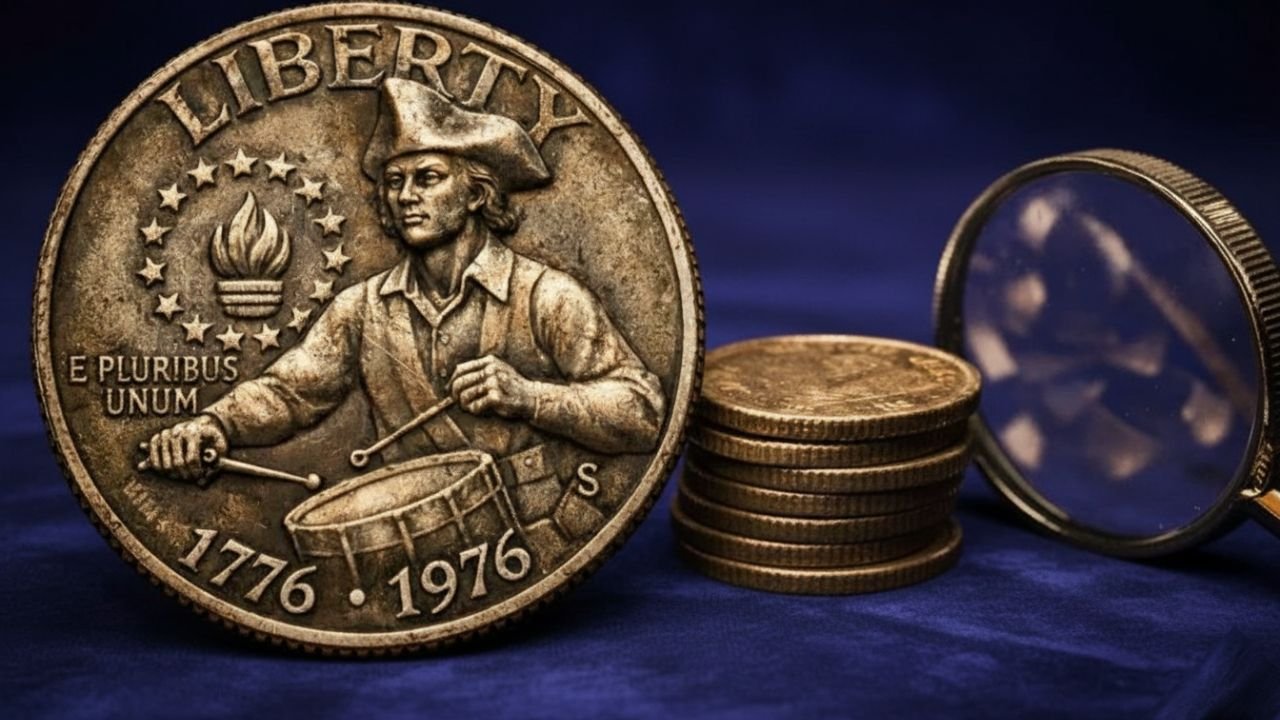
1976 Drummer Boy Quarter: The 1976 Bicentennial Quarter, with its distinctive colonial drummer design, stands as a proud numismatic tribute to America’s 200th birthday. While millions were minted for everyday commerce, a combination of rare minting varieties, precious metal composition, and exceptional preservation has created a vibrant collector’s market for this iconic coin. This guide explores the true value behind these quarters, separating fact from fiction and providing a clear path for identification.
Historical Significance of the Bicentennial Coinage
In the mid-1970s, the United States Mint launched a special coinage program to commemorate the nation’s bicentennial. For the quarter-dollar, a public design contest was held, which was won by sculptor Jack L. Ahr. His reverse design, featuring a colonial drummer boy alongside a victory torch encircled by thirteen stars, captured the spirit of the American Revolution. All quarters struck in 1975 and 1976 bear this design and the dual date “1776-1976,” replacing the standard eagle reverse. These coins were released into circulation with great fanfare, quickly becoming cherished pieces of living history for the American public.
1976 Bicentennial Quarter Reference Table
| Variety | Mint Mark | Composition | Mintage | Key Characteristics | Typical Value Range (Circulated to High Grade) |
|---|---|---|---|---|---|
| Clad Circulation Strike | D (Denver) | Copper-nickel clad | ~860+ Million | Standard issue for daily use; may show wear. | $0.25 to $5.00 |
| P (Phila.) | Copper-nickel clad | ~809+ Million | No mint mark; standard circulation issue. | $0.25 to $5.00 | |
| Clad Proof | S (San Fran.) | Copper-nickel clad | ~7 Million | Mirror-like finish; sold in proof sets. | $5.00 to $100+ |
| Silver Proof | S (San Fran.) | 40% Silver (outer layers: 80% silver, 20% copper) | ~4 Million | Mirror finish, 40% silver content; heavier. | $10.00 to $500+ |
| Silver Uncirculated | S (San Fran.) | 40% Silver | ~4 Million | Matte-like finish, no mirror background; 40% silver. | $8.00 to $400+ |
What Makes a Bicentennial Quarter Valuable?
The vast majority of Bicentennial Quarters found in pocket change are the copper-nickel clad version and are worth face value. Value is derived from specific attributes that set a coin apart from its common counterparts. These key factors include the coin’s mint mark, its metallic composition, its condition or grade, and the presence of any minting errors. Coins produced at the San Francisco Mint for collectors, those struck in 40% silver, and specimens in flawless, uncirculated condition hold the most premium. Dramatic errors, such as a strong double strike or a significant off-center alignment, can also create substantial value for a unique piece.
Understanding the Premium Varieties
Not all Bicentennial Quarters are created equal. The Mint produced special versions for collectors that are the primary targets for numismatic interest.
- 1976-S Silver Proof Quarter: Struck at the San Francisco Mint, these coins have a brilliant, mirror-like background and frosted design details. They are composed of 40% silver and were sold in special proof sets. Their value is tied to their silver content, their pristine condition, and their collectible status.
- 1976-S Silver Uncirculated Quarter: Also minted in San Francisco with a 40% silver composition, these coins were struck with specially polished dies but lack the mirror finish of a proof. They were sold in mint sets and are valued for their silver content and high-grade, unblemished surfaces.
- 1976 Clad Proof Quarter: This version has the standard copper-nickel clad composition but was produced with the meticulous proof striking process at the San Francisco Mint. While more common than the silver versions, a clad proof in a top-grade (PR-70) is still a desirable collector’s item.
The Reality of High-Value Claims
Sensational headlines about a Bicentennial Quarter being worth $550,000 are largely myth. While this figure captures the imagination, it does not reflect the actual numismatic market. In reality, the most valuable examples—such as perfect-grade (PR-70 or MS-70) silver proofs or dramatic error coins—typically trade in the range of hundreds to several thousand dollars. The legend underscores the coin’s cultural impact but should be understood as hyperbole rather than a price guide.
Identifying and Preserving Your Coin
To assess a Bicentennial Quarter, first check the edge. If it has a solid silver stripe, it is a 40% silver coin. Next, look at the obverse (heads side) for a mint mark above the date. An “S” mint mark indicates a San Francisco issue, which is always a collector coin. Examine the surfaces under good light for any unusual doubling or mis-strikes. For any coin you believe may be valuable, avoid cleaning it, as this permanently damages the surface and destroys collector value. Store coins in acid-free holders in a stable, dry environment.
Investment and Cultural Perspective
For collectors, Bicentennial Quarters represent an accessible entry into numismatics with a strong historical narrative. While not traditionally high-stakes investment vehicles, the premium varieties in certified, high-grade holders have shown steady appreciation, benefiting from their finite supply and enduring patriotic appeal. Ultimately, these coins serve as a tangible connection to a nationwide celebration, making them a perennial favorite that transcends mere metal value.
Frequently Asked Questions (FAQ)
Q: I found a 1976 quarter in my change. Is it worth anything?
A: Most likely, it is a common copper-nickel clad circulation strike worth 25 cents. Check for an “S” mint mark and a silver edge, as these traits indicate a more valuable collector version.
Q: What is the single most important factor in determining value?
A: Condition is paramount. A perfectly preserved, uncirculated, or proof coin is worth exponentially more than a worn one. This is followed by composition (silver vs. clad) and mint mark.
Q: Should I clean my old Bicentennial Quarter to make it shine?
A: Absolutely not. Cleaning a coin, even with gentle polishes, scours the surface and leaves microscopic abrasions. This is considered damage in the collecting world and will drastically reduce its value.
Q: How can I get my coin professionally graded?
A: Third-party grading services like PCGS (Professional Coin Grading Service) or NGC (Numismatic Guaranty Company) offer authentication, grading, and encapsulation. You can submit coins through their websites or an authorized dealer.
Q: Are any Bicentennial Quarters made of pure silver?
A: No. The silver versions are 40% silver. There are no officially minted 1976 quarters composed of 90% silver, though custom pieces and patterns may exist outside of regular production.
Q: Where is the mint mark located on this quarter?
A: On the obverse (Washington’s head side), look just above the date “1776-1976.” A small “D” (Denver), “S” (San Francisco), or no mint mark (Philadelphia) will be present.