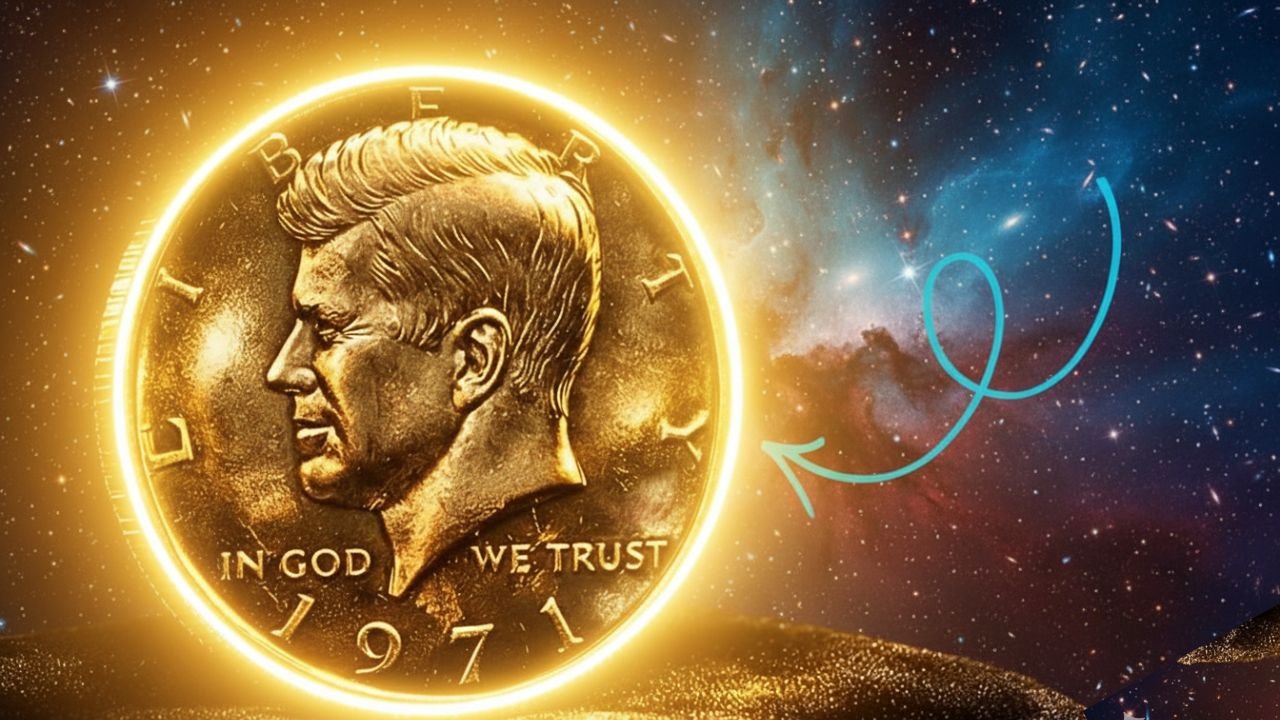
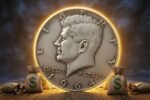
1971 Kennedy Half Dollar: The Kennedy Half Dollar stands as one of the most poignant and enduring pieces of American coinage. First minted in 1964 as a national memorial to a fallen president, it captured the collective grief and admiration of a nation. The 1971 issue holds a distinct place in this legacy, representing a significant shift in the coin’s physical composition and its journey from a circulating currency to a primarily collectible item. For collectors and historians alike, this coin is a tangible link to an era of economic change and lasting tribute.
The Historical Significance of the 1971 Edition
The transition to the 1971 Kennedy Half Dollar was driven by practical economics. From 1965 through 1970, the coins were minted in a clad “sandwich” of 40% silver. However, by 1971, the rising price of silver made it financially unsustainable to include the precious metal in a circulating fifty-cent piece. Consequently, the 1971 coin became the first in the series to be struck for general circulation in a copper-nickel clad composition, identical to the dime and quarter. This shift marks the 1971 issue as a key artifact in the story of America moving away from precious metals in its everyday money, reflecting broader monetary trends of the 20th century.
1971 Kennedy Half Dollar Quick Reference Table
| Feature | Detail |
|---|---|
| Year of Issue | 1971 |
| Face Value | $0.50 (USD) |
| Composition | Outer layers: 75% Copper, 25% Nickel. Core: 100% Copper (Cu-Ni Clad) |
| Weight | 11.34 grams |
| Diameter | 30.6 mm |
| Edge | Reeded |
| Mints & Mint Marks | Philadelphia (No mint mark), Denver (D), San Francisco (S – Proof coins only) |
| Obverse Designer | Gilroy Roberts |
| Reverse Designer | Frank Gasparro |
| Key Significance | First year of issue with no silver content for circulation strikes. |
Artistic Design and Symbolism
The coin’s powerful design has remained consistent, contributing to its iconic status. The obverse, sculpted by Chief Engraver Gilroy Roberts, features a dignified left-facing portrait of President John F. Kennedy. The reverse, designed by Assistant Engraver Frank Gasparro, depicts the Presidential Seal—an eagle with a shield, clutching an olive branch of peace in one talon and a bundle of arrows representing strength in the other. Surrounded by 50 stars, the design embodies the unity and ideals of the nation. For the 1971 issue, these artistic elements were struck in the new copper-nickel clad, giving the coin a different luster and weight compared to its silver-clad predecessors.
Understanding Value From Face Value to Premium
The majority of 1971 Kennedy Half Dollars, having entered circulation, are worth their face value of fifty cents to a few dollars. Their true numismatic value is unlocked in higher states of preservation. Uncirculated coins, particularly those with full mint luster, and proof specimens from San Francisco, are sought after by collectors. Value escalates significantly with certified grade, rarity, and the presence of mint errors. This accessibility makes the 1971 issue an excellent and affordable starting point for new collectors while still offering challenges for seasoned numismatists.
Notable Varieties and Mint Errors
While not the most error-prone year, careful examination of 1971 halves can reveal valuable oddities. Examples include doubled die varieties, where elements of the design show doubling due to a misaligned hub during the die creation process. Striking errors, such as off-center coins or those struck on the wrong planchet, are also coveted. For proof coins, the designation of “Deep Cameo” or “Ultra Cameo,” referring to frosted design elements against mirror-like fields, adds a substantial premium. These unique characteristics transform a common coin into a numismatic conversation piece.
A Collector’s Cornerstone
The Kennedy Half Dollar series enjoys enduring popularity, fueled by its historical context, recognizable design, and the achievable goal of collecting by date and mint mark. The 1971 coin is a cornerstone, essential for completing a clad series set. Its story of transition engages collectors who appreciate the intersection of history, economics, and art. The thrill of potentially discovering a rare variety in a bank roll or old collection continues to attract hobbyists, ensuring the series remains vibrant for generations.
Frequently Asked Questions (FAQ)
Q: Is a 1971 Kennedy Half Dollar made of silver?
A: No. Circulating 1971 Kennedy Half Dollars are made of copper-nickel clad. Only proof specimens from San Francisco in special sets were struck in a 40% silver composition.
Q: Where is the mint mark on a 1971 Kennedy Half Dollar?
A: The mint mark (“D” for Denver or “S” for San Francisco Proofs) is located on the obverse (front), just below Kennedy’s neck and above the date. Coins from Philadelphia have no mint mark.
Q: What is the most valuable 1971 Kennedy Half Dollar?
A: The highest values are for certified high-grade examples of rare errors (like major doubled dies or striking errors) and for the 1971-S Silver Proof coins in perfect “Deep Cameo” condition.
Q: How can I tell if my 1971 half dollar is a proof?
A: Proof coins have a brilliant, mirror-like background (field) and frosted, matte-looking design elements. They will also bear the “S” mint mark. They were sold in special sets by the U.S. Mint and were not intended for circulation.
Q: Should I clean my old Kennedy Half Dollar to increase its value?
A: Absolutely not. Cleaning a coin, especially with abrasive materials, will permanently damage its surface and drastically reduce its collector value. It is best to handle coins by the edges and store them in appropriate holders.
The Enduring Legacy
The 1971 Kennedy Half Dollar is more than just fifty cents. It is a chapter in the story of American coinage, a symbol of adaptation, and a keepsake of collective memory. Whether appreciated for its historical narrative, its role in a collection, or the simple pleasure of holding a piece of history, this coin exemplifies how ordinary objects can carry extraordinary significance. It reminds us that value is not only measured in metal or market price, but also in the stories we preserve and pass forward.