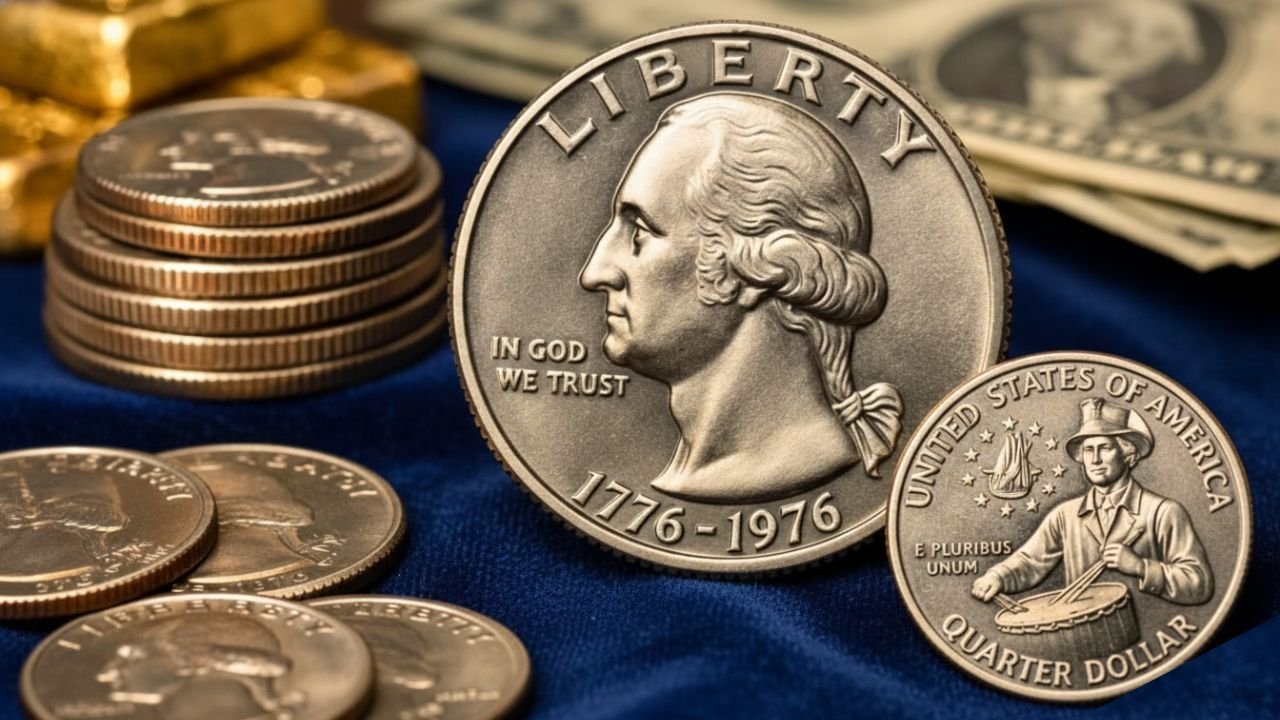
1776–1976 Bicentennial Quarter Value: Ever come across a quarter that looks a little different from the others? It might have a colonial drummer on the back and the dates “1776–1976” on the front. That’s the Bicentennial Quarter! The U.S. Mint made these special coins in 1975 and 1976 to celebrate 200 years since America declared its independence. The regular version of this coin is pretty common and only worth 25 cents, but some rare errors and super shiny copies can be worth a lot of money to collectors.
Why Are Collectors Searching for These Quarters?
You might be wondering why people get so excited about a simple quarter. Well, it’s the thrill of the hunt! While most Bicentennial Quarters are ordinary, a few special ones stand out from the crowd. These could be coins with minting mistakes (like an error), or ones made from silver instead of the usual metals. Finding one of these in your pocket change or a piggy bank would be like discovering a hidden treasure. It’s this mix of history and the chance of finding something valuable that makes collecting them so much fun.
Spotting a Rare Error Coin
Error coins happen when something goes wrong at the mint, and they are super interesting to collectors. Imagine a quarter that was struck off-center, making the image look all wonky, or one where the design looks doubled because it was stamped twice. Some rare errors even involve the coin being stamped on the wrong type of metal blank, like a dime planchet! These mistake coins are the rarest finds and can be worth hundreds or even thousands of dollars, depending on how cool the error is and what condition the coin is in.
The Special Silver Edition
Besides the regular copper-nickel quarters you find in vending machines, the U.S. Mint also made a special version for collectors. These Bicentennial Quarters are made from a 40% silver blend, giving them a different look and feel. They were sold in special sets and weren’t meant for everyday spending. Because they contain real silver, they are automatically worth more than face value. While they’re not super rare, finding a silver one, especially in perfect, shiny condition, is a great score for any collector.
How Condition Affects a Coin’s Value
Just like with trading cards, the condition of a coin is everything. A coin that’s been banged up in pockets for years isn’t going to be worth as much as one that’s still shiny and new-looking. Collectors use a grading system to describe a coin’s condition, from poor to “Mint State” (perfect). Coins with no scratches, sharp details, and their original shine are the most valuable. If you find a Bicentennial Quarter, take a close look at it—the better it looks, the more exciting it might be!
The Bicentennial Quarter Market in 2026
So, are people still looking for these coins in 2026? Absolutely! The market for rare Bicentennial Quarters is still going strong. You can still find common ones in your change, but the rare error coins and the silver editions are always in high demand. Collectors and even some investors like owning these pieces of history. Their unique design and the story behind them make them a lasting favorite. You never know, that quarter in your hand might be a lot more special than it looks!
Bicentennial Quarter at a Glance
| Feature | Description |
|---|---|
| Coin Name | Bicentennial Washington Quarter |
| Minting Years | 1975 and 1976 |
| Date on Coin | 1776–1976 |
| Designer | Jack L. Ahr (reverse) |
| Reverse Design | Colonial drummer boy and a torch with 13 stars |
| Obverse Design | George Washington (same as regular quarters) |
| Main Metal Type | Copper-Nickel Clad (for regular use) |
| Special Metal Type | 40% Silver Clad (for collector sets) |
| Common Errors | Doubled dies, off-center strikes, wrong planchet (metal) |
| Value Range | 25 cents for common ones, to thousands for rare errors |
Quick Collector Tips
- Start with what you have: Check any loose change, old coin jars, or collections from family members. You never know what you might find.
- Get a magnifying glass: Use a magnifying glass to look closely at the details on your coin. This is the best way to spot doubling or other small errors.
- Handle with care: Always hold coins by the edges to prevent fingerprints and scratches on the front and back.
- Keep them safe: Store your coins in special soft plastic holders to protect them from damage and keep them in top condition.
Frequently Asked Questions (FAQ)
1. Is my 1776-1976 quarter worth money?
Probably not, unless it’s in perfect condition, is a rare error, or is the special 40% silver version. Most you’ll find are common and only worth 25 cents.
2. How can I tell if my Bicentennial Quarter is silver?
Check the edge of the coin. A regular quarter will have a brown stripe (copper) in the middle. A silver quarter will have a solid silver color all the way through the edge. You can also weigh it, as silver quarters are slightly heavier.
3. What is a “doubled die” error?
It’s a minting mistake where the design gets stamped twice, slightly off-center. It makes the letters or numbers on the coin look blurry or doubled, like a double image. These are rare and can be valuable.
4. Where can I find one of these valuable quarters?
You can find them in your everyday pocket change, by buying rolls of coins from the bank, or by searching through coins at antique shops and estate sales.
5. How do I know what grade my coin is?
Grading is a skill that takes practice. It’s based on how much wear the coin has. You can compare your coin to pictures in a coin guide. For a professional opinion, you can pay a service to grade and authenticate your coin.
6. Are all Bicentennial Quarters from 1975 or 1976?
Yes! Even though they all say “1776-1976,” they were actually made during both 1975 and 1976. None of these quarters were made with the single dates of 1975 or 1976.