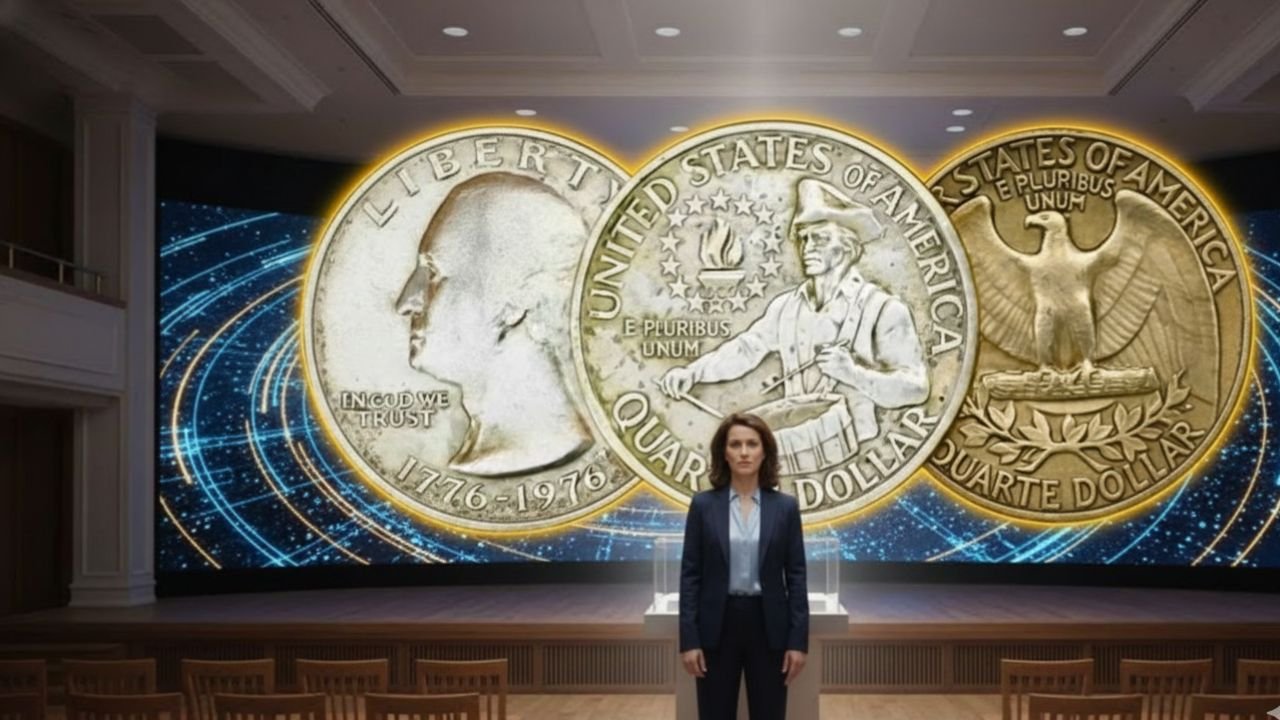
1776–1976 Bicentennial : The 1776-1976 Bicentennial Quarter stands as a unique piece of American history, struck to commemorate the nation’s 200th anniversary. Unlike regular Washington quarters, this special issue was designed to ignite patriotic spirit and allow every citizen to hold a piece of the celebration in their everyday change. While countless millions were produced, making most examples quite common, certain varieties have captured the keen interest of collectors. As we look at the coin in 2026, it remains a popular and accessible entry point into numismatics, with a few rare specimens commanding impressive values.
Historical Significance and Design
In the lead-up to America’s Bicentennial, the U.S. Mint embarked on a special commemorative coin program. The quarter, half dollar, and dollar were chosen to receive unique reverse designs for the celebration. The Bicentennial quarter features a distinctive colonial drummer on its reverse, a powerful emblem of the Revolutionary War era. Above the drummer, a torch surrounded by thirteen stars symbolizes the unity and enduring liberty of the original colonies. The obverse retains the classic portrait of George Washington by John Flanagan but is marked with the dual date 1776-1976, a feature that sets these coins apart in the series. These quarters entered circulation in 1975 and continued through 1976, embedding the bicentennial celebration into daily American life.
Mintage and Composition Details
Bicentennial quarters were produced at three U.S. Mints: Philadelphia (no mint mark), Denver (D), and San Francisco (S). The vast majority were struck in the standard copper-nickel clad composition for public circulation. Additionally, the San Francisco Mint produced special collector versions in 40% silver. These silver versions were sold in special Mint Sets and Proof Sets and were not released into circulation. Understanding the mint mark and composition is the first step in identifying a quarter’s potential worth.
Bicentennial Quarter Value Overview Table (2026)
| Coin Type & Composition | Mint Mark | Condition | Key Characteristics | Estimated Value Range (2026) |
|---|---|---|---|---|
| Circulated Clad Quarter | P, D | Worn (Circulated) | Shows wear from use; common. | Face Value ($0.25) |
| Uncirculated Clad Quarter | P, D | Mint State (MS-60+) | No wear; bright luster; from original rolls/sets. | $1 – $5 |
| Proof Clad Quarter | S | Proof (PR) | Frosted design on mirror-like background; from Proof Sets. | $5 – $20 |
| Uncirculated 40% Silver Quarter | S | Mint State (MS-60+) | 40% silver content; sold in special silver sets. | $15 – $50 (plus silver bullion value) |
| Proof 40% Silver Quarter | S | Deep Cameo Proof (PR) | Strong contrast between mirror fields and frosted design; silver. | $60 – $200+ |
| Error Coins (e.g., Doubled Die, Off-Center) | Various | Certified (e.g., MS/PR) | Dramatic striking errors authenticated by grading service. | $500 – $3,000+ |
What Makes a Bicentennial Quarter Valuable?
While finding a Bicentennial quarter in your change is still likely, its value is typically sentimental. However, key factors can elevate its worth:
- Composition: The 40% silver versions are inherently more valuable due to their precious metal content and lower mintage aimed at collectors.
- Condition: Coins in pristine, uncirculated, or proof condition are always worth more than worn, circulated ones. A coin graded by a professional service (like PCGS or NGC) in a high grade (MS-65 or above) commands a significant premium.
- Errors: Dramatic minting errors, such as doubled dies (especially on the drummer’s features), off-center strikes, or clipped planchets, are highly sought after by specialists.
- Premium Proofs: Proof coins with exceptional “deep cameo” contrast between the mirrored fields and frosted design are particularly desirable.
Collecting Bicentennial Quarters Today
For new and experienced collectors alike, the Bicentennial quarter series offers a fulfilling pursuit. A complete collection can include examples from each mint (P, D, S) in both clad and silver compositions. Many enjoy the hunt for high-grade examples or the challenge of finding a genuine error coin. When searching, use a magnifying glass to inspect details carefully, and consider professional certification for any coin you believe may be rare. These coins are readily found at coin shops, online auctions, and shows, making them a cornerstone of modern 20th-century collections.
A Lasting Cultural Icon
Beyond its numismatic details, the Bicentennial quarter serves as a tangible link to a moment of national pride and reflection. It represents the celebrations, parades, and renewed sense of historical awareness that defined America’s 200th birthday. For many, it is a keepsake that transcends metal and mint marks, embodying a story of national heritage.
Frequently Asked Questions (FAQ)
Q: Is every 1776-1976 quarter worth more than 25 cents?
A: No. The overwhelming majority of Bicentennial quarters found in circulation are the copper-nickel clad version and are worth only their face value of 25 cents if they are worn.
Q: How can I tell if my Bicentennial quarter is silver?
A: The easiest ways are to check the edge of the coin. A copper-nickel clad quarter has a distinct brownish stripe between two silver-colored layers. A 40% silver quarter’s edge will appear solid silver-gray. Also, silver coins were only minted in San Francisco and bear an “S” mint mark.
Q: Where is the mint mark located on a Bicentennial quarter?
A: The mint mark (“P,” “D,” or “S”) is found on the obverse (front) of the coin, just to the right of Washington’s hair ribbon, near the base of his neck.
Q: What is the most valuable Bicentennial quarter?
A: The most valuable are high-grade certified examples of the 40% silver proof versions, especially those with deep cameo contrast, and dramatic error coins (like a well-defined doubled die) that have been authenticated by a top grading service.
Q: Did they make any Bicentennial quarters in 1975?
A: Yes. All quarters, half dollars, and dollars dated 1776-1976 were actually produced and released during 1975 and 1976. No quarters bearing the single date “1975” were minted.
Q: Are Bicentennial quarters still in circulation?
A: Yes, though they are found less frequently than modern quarters. It is still entirely possible to receive one as change, making the search a fun and accessible hobby.