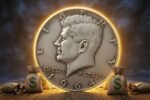
17 Rare Kennedy Half Dollars: The Kennedy half dollar stands as one of the most poignant and recognizable coins in American numismatic history. First minted in 1964 as a heartfelt tribute to the assassinated President John F. Kennedy, it transformed from circulating currency into a cherished piece of national memory. For collectors, this series offers a fascinating journey through U.S. minting history, featuring both common issues and extraordinary rarities that tell a story of design, error, and commemoration. This guide explores the key rare dates and varieties, providing a fresh perspective for enthusiasts seeking to understand the value and history behind these iconic coins.
The 1964 Silver Issue A Historic Beginning
The inaugural 1964 Kennedy half dollar holds a special place in collections. Struck in 90% silver, it was the public’s first tangible memorial to the fallen president. Its composition alone gives it a premium over face value, but examples in mint state condition, reflecting their original luster and lack of wear, are particularly prized. This coin marks the emotional start of the series and is a cornerstone for any collection.
Kennedy Half Dollar Quick Reference Table
| Year & Mintmark | Key Variety | Notable Feature | Why It’s Valuable |
|---|---|---|---|
| 1964 (P) | Standard Issue | 90% Silver, First Year of Issue | Historical significance & silver content |
| 1964 (P) | Accented Hair Proof | Pronounced hair details | Extreme rarity and historical design change |
| 1964 (P) | Special Mint Set (SMS) | Satin finish, special striking | Extreme rarity; only a few known |
| 1966 (P) | Special Mint Set (SMS) | Satin finish | Limited production for collectors |
| 1970-D | Circulation Strike | Denver Mint | Low mintage; sold only in mint sets |
| 1971-D | Doubled Die Obverse (DDO) | Doubled lettering on obverse | Popular mint error variety |
| 1972 (P) | Doubled Die Obverse (DDO) | Strong doubling on inscriptions | Dramatic and recognizable error |
| 1979-S | Type 2 Proof | Clear “S” mintmark | Scarcer than the Type 1 variety |
| 1998-S | Matte Finish Proof | Unique granular proof surface | Low mintage experimental issue |
| 2014 (W) | 50th Anniv. Gold Proof | 24-karat gold, 0.75 oz. | Precious metal & commemorative status |
| 2019-S | Enhanced Reverse Proof | Frosted design on mirror field | Modern rarity with unique finish |
The Subtle Distinction of the 1964 Accented Hair Proof
Among the most celebrated varieties is the 1964 Accented Hair proof. Early proof coins featured more deeply engraved strands in Kennedy’s hair, a detail allegedly softened at the request of Jacqueline Kennedy. This subtle change makes the earlier “accented hair” proofs distinctly rare. Their value is significant, especially for specimens that have preserved their flawless, mirror-like surfaces, representing a fleeting moment in the coin’s design evolution.
The Elusive 1964 and Mid-1960s Special Mint Sets (SMS)
During a period when the U.S. Mint did not issue traditional proof sets (1965-1967), it produced Special Mint Sets (SMS). The coins in these sets, including the half dollars, have a unique satiny finish that distinguishes them from regular uncirculated coins. The 1964 SMS half dollar is exceptionally rare, with only a few confirmed specimens known. The 1966 and 1967 SMS half dollars, while more available than the 1964, remain sought-after for their distinctive appearance and limited availability compared to regular issues.
The Key-Date 1970-D Kennedy Half Dollar
The 1970-D is a crucial key date because it was never released into general circulation. It was struck exclusively for inclusion in that year’s mint sets, resulting in a low mintage. Its scarcity was immediate and intentional, making it a staple on every serious collector’s checklist and a coin that consistently commands strong interest and value.
Intriguing Error Coins Doubled Die Varieties
Minting errors create instant rarities. The Kennedy series features several notable doubled die obverse coins, where the design elements appear doubled due to a misalignment in the die-hubbing process. The 1971-D, 1972, and 1974-D doubled die obverses are all highly collectible. Their value increases with the strength of the doubling and the coin’s state of preservation, offering a tangible piece of minting history.
Modern Rarities and Special Issues
The series continued to produce collectible milestones. The 1979-S and 1981-S Type 2 Proofs are identified by a clearer, more separated “S” mintmark. The 1998-S Matte Finish Proof, with its distinctive granular surface, was a limited experimental issue. Major anniversaries brought special releases, like the 2014 50th Anniversary coins struck in .999 silver and 24-karat gold. More recently, the 2019-S Enhanced Reverse Proof used advanced finishing techniques to create a stunning visual effect, making it an instant modern classic.
Frequently Asked Questions (FAQ)
Q: What makes a Kennedy half dollar valuable?
A: Value is driven by several factors: rarity (low mintage), condition (grade), silver content (for 1964-1970 coins), and special attributes like being a proof, an error, or a unique variety (e.g., Accented Hair, Doubled Die).
Q: Are all Kennedy half dollars made of silver?
A: No. Only those dated 1964 are 90% silver. Those dated 1965-1970 are 40% silver. Coins dated 1971 and later intended for circulation are made of a copper-nickel clad composition, except for special proof and commemorative editions sold directly to collectors.
Q: Where is the mintmark located on a Kennedy half dollar?
A: For coins dated 1964-1967, the mintmark is on the reverse (back), below the eagle’s claw on the left. From 1968 to the present, the mintmark is found on the obverse (front), just below Kennedy’s neck.
Q: I found a 1970 half dollar. Is it rare?
A: The 1970-D half dollar is considered rare because it was only available in mint sets. If you have one from circulation, it’s likely a 1970-D and could be valuable. There is no 1970-P (Philadelphia) half dollar for public circulation.
Q: How should I store and handle my valuable Kennedy half dollars?
A: Always handle coins by the edges to avoid transferring oils from your skin. Store them in inert materials like acid-free coin flips, archival-quality albums, or sealed plastic capsules (slabs) from professional grading services. Avoid PVC-based plastic holders, as they can damage coins over time.
Q: Is it worth getting my Kennedy half dollar professionally graded?
A: For common circulated dates, it may not be cost-effective. However, for rare dates (like 1970-D), high-grade uncirculated coins, or suspected rare varieties (like Doubled Dies or Accented Hair), professional authentication and grading can significantly enhance value and salability.
Conclusion
The journey through the Kennedy half dollar series is more than a pursuit of rarity; it is an engagement with a narrative of American culture, artistry, and technology. From the solemn silver beginnings in 1964 to the innovative special finishes of the 21st century, each rare variety encapsulates a moment in time. For collectors, these coins offer a rewarding blend of historical exploration and the thrill of the hunt, ensuring the legacy of President Kennedy continues to be celebrated, one coin at a time.